Why New Braunfels Residents with Psoriasis Deserve More Than Drugstore Creams
If you’re searching for psoriasis treatment in New Braunfels, TX, chances are you’ve already spent months — maybe years — trying over-the-counter lotions, oatmeal baths, and whatever the internet recommended last week. And chances are your skin is still red, flaky, and uncomfortable. That’s not your fault. Psoriasis is a chronic autoimmune disease that requires medical treatment, not better moisturizer.
The American Academy of Dermatology estimates that psoriasis affects more than 7.5 million adults in the United States. It’s not just a cosmetic nuisance — it’s an inflammatory condition that can affect your joints, your cardiovascular health, and your quality of life. And while there’s no cure, the treatment options available today are better than they’ve ever been.
At Elect Dermatology, our board-certified dermatologists treat psoriasis patients across Comal County — from downtown New Braunfels and Gruene to Canyon Lake, San Marcos, Seguin, and the surrounding Hill Country — with personalized treatment plans that go far beyond what a general practitioner can offer.
What Is Psoriasis and Why Does It Happen?
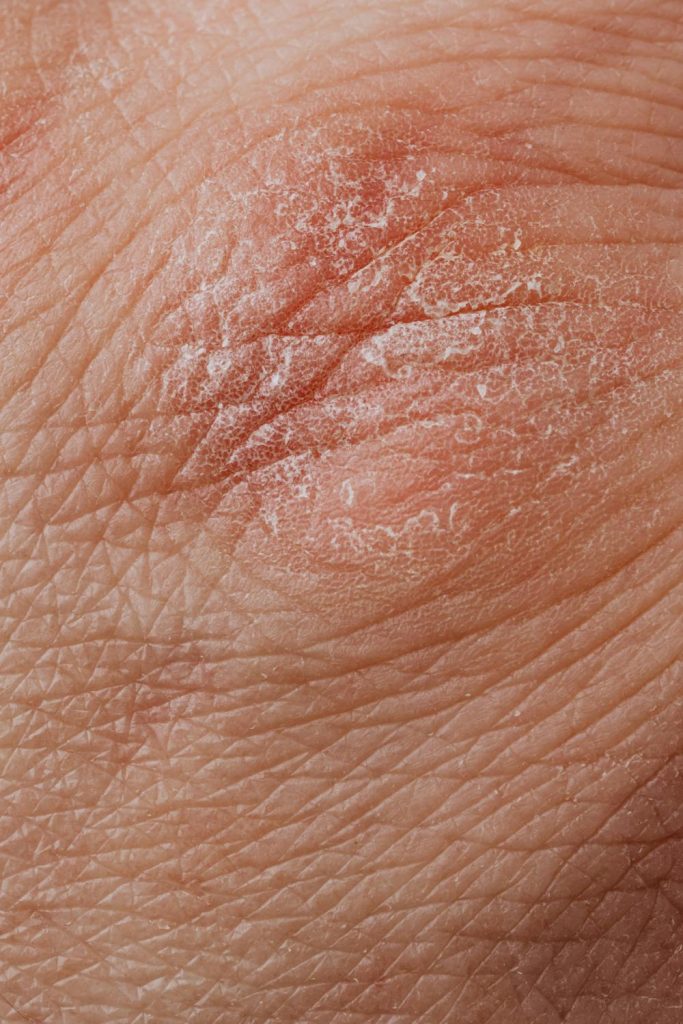
Psoriasis is an autoimmune condition in which the immune system mistakenly attacks healthy skin cells, accelerating the skin cell lifecycle from about 28 days to just 3 to 4 days. The result is a buildup of thick, scaly patches — called plaques — that appear most commonly on the elbows, knees, scalp, and lower back, though they can develop anywhere on the body.
The most common form is plaque psoriasis, which accounts for roughly 80 to 90% of all psoriasis cases according to the National Psoriasis Foundation. Other types include guttate psoriasis (small, drop-shaped lesions often triggered by strep throat), inverse psoriasis (smooth red patches in skin folds), pustular psoriasis (pus-filled blisters), and erythrodermic psoriasis (widespread redness covering most of the body — a medical emergency).
Genetics play a significant role — about one-third of people with psoriasis have a family member with the condition — but flares are often triggered by external factors including stress, infections, certain medications, skin injuries (the Koebner phenomenon), cold weather, and heavy alcohol consumption.
Psoriasis Treatment Options in New Braunfels
Modern psoriasis treatment follows a step-up approach: start with the least invasive options and escalate as needed based on the severity and location of your psoriasis, your response to treatment, and your personal preferences. Your dermatologist will tailor the approach specifically to you.
Topical Treatments
For mild to moderate psoriasis, topical medications are the first line of defense. These include prescription-strength corticosteroids (far more effective than anything available over the counter), vitamin D analogues like calcipotriene, retinoids like tazarotene, calcineurin inhibitors for sensitive areas like the face and skin folds, and newer options like roflumilast (Zoryve), which was FDA-approved in 2022 as the first topical PDE4 inhibitor for plaque psoriasis.
The key difference between prescription topicals and drugstore creams isn’t just strength — it’s specificity. Your dermatologist selects the right formulation, potency, and vehicle (ointment vs. cream vs. foam vs. solution) for the specific body area and severity of your plaques.
Phototherapy (Light Therapy)
For moderate psoriasis that doesn’t respond adequately to topicals alone, phototherapy uses controlled ultraviolet light to slow skin cell turnover and reduce inflammation. Narrowband UVB therapy is the most commonly prescribed form and is effective for widespread plaque psoriasis. The AAD recommends phototherapy as a well-established treatment with decades of safety data.
Targeted phototherapy using the XTRAC excimer laser delivers concentrated UVB light directly to psoriasis plaques without affecting surrounding healthy skin — ideal for patients with localized, stubborn patches on the elbows, knees, or scalp. At Elect Dermatology, we offer XTRAC laser therapy as part of our comprehensive psoriasis treatment approach.
Systemic Medications
For moderate to severe psoriasis, oral or injectable medications that work throughout the body may be necessary. Traditional systemics include methotrexate, cyclosporine, and acitretin. These medications are effective but require regular blood monitoring due to potential effects on the liver, kidneys, and immune function.
Biologic Therapies
Biologics have revolutionized psoriasis treatment over the past two decades. These injectable or infused medications target specific parts of the immune system responsible for psoriasis — rather than suppressing the entire immune system — resulting in better efficacy with fewer side effects than traditional systemics.
A 2024 systematic review and network meta-analysis published in PMC evaluated 124 randomized clinical trials of 12 different biologics and found that modern biologics demonstrate significantly improved efficacy and quality of life relative to placebo, with no increased risk of serious adverse events through the study period. There are now more than 13 FDA-approved biologic options for moderate to severe psoriasis, targeting TNF-alpha, IL-17, IL-12/23, and IL-23 pathways.
Many patients who start biologic therapy achieve 75% to 90% skin clearance — and some achieve complete clearance for the first time in their lives. Your dermatologist will discuss which biologic is most appropriate based on your specific psoriasis pattern, other health conditions, insurance coverage, and lifestyle.
Psoriasis Is More Than a Skin Condition
One of the most important reasons to see a dermatologist for psoriasis — rather than managing it on your own — is that psoriasis is associated with several serious health conditions that your dermatologist will monitor for:
Psoriatic arthritis: Up to 30% of psoriasis patients develop psoriatic arthritis, which causes joint pain, stiffness, and swelling. Early detection and treatment can prevent permanent joint damage. The AAD emphasizes that dermatologists play a critical role in screening for and managing this comorbidity.
Cardiovascular disease: Psoriasis is associated with an increased risk of heart attack, stroke, and cardiovascular death, particularly in patients with severe disease. This is thought to be related to the chronic systemic inflammation that drives psoriasis.
Mental health: Depression and anxiety are significantly more common in psoriasis patients. The visible nature of the disease, the chronic discomfort, and the unpredictability of flares all take a psychological toll that shouldn’t be minimized.
Metabolic syndrome: Patients with psoriasis have higher rates of obesity, diabetes, and high cholesterol — conditions that further increase cardiovascular risk.
What Triggers Psoriasis Flares in Texas?
Living in the New Braunfels area comes with specific psoriasis challenges. While moderate sun exposure can actually improve psoriasis for many patients, the extreme Texas summer heat can trigger flares through excessive sweating and skin irritation. Air conditioning — which most of us run 8 months a year — dries the skin and can worsen plaques. Cedar fever season (December through February) brings respiratory infections that can trigger guttate psoriasis flares.
Stress is the most commonly reported trigger, and managing it through exercise, sleep, and stress-reduction techniques can be as important as medication in keeping psoriasis under control. Your dermatologist can help you identify your personal triggers and build a management plan that accounts for them.
Common Questions About Psoriasis Treatment
Is psoriasis contagious?
No. Psoriasis is an autoimmune condition — it cannot be spread through touch, sharing towels, or any other form of contact. This is one of the most common misconceptions, and unfortunately it contributes to the social stigma that many psoriasis patients experience.
Can psoriasis be cured?
There is currently no cure for psoriasis, but modern treatments can achieve dramatic clearance — and for many patients, near-complete or complete remission. The goal of treatment is to minimize flares, maintain clear skin, and protect your overall health.
Will my insurance cover psoriasis treatment?
Most insurance plans cover psoriasis treatment, including prescription topicals, phototherapy, and biologic medications. Biologic manufacturers also offer patient assistance programs that can significantly reduce out-of-pocket costs. Our staff at Elect Dermatology will work with your insurance to verify coverage and explore options.
How soon will treatment work?
Topicals typically show improvement within 2 to 4 weeks. Phototherapy usually requires 15 to 20 sessions before significant improvement is visible. Biologics can begin working within weeks, though full effects may take 3 to 4 months. Your dermatologist will set realistic timelines during your first visit.
Should I see a dermatologist or my primary care doctor?
While a primary care physician can diagnose psoriasis and prescribe basic treatments, a board-certified dermatologist has specialized training in the full spectrum of psoriasis therapies — including biologics, phototherapy, and combination approaches — and can monitor for associated conditions like psoriatic arthritis. For moderate to severe psoriasis, dermatologist management is strongly recommended.
Start Getting Your Psoriasis Under Control in New Braunfels
Living with psoriasis doesn’t mean living with constant flares, uncomfortable plaques, and the frustration of treatments that don’t work. A board-certified dermatologist in New Braunfels can develop a treatment plan that matches the severity of your disease — from targeted topicals for mild cases to cutting-edge biologics for severe psoriasis — and monitor your overall health along the way.
At Elect Dermatology, Dr. Hockley and Dr. Stahr treat psoriasis patients at every stage, from new diagnoses to patients who have struggled for years with inadequate treatment. We’ll evaluate your skin, discuss your goals and concerns honestly, and build a plan that works for your life and your budget.
New patients are welcome, and we’re currently accepting same-week appointments.
Call us today at (833) 353-2875 or request an appointment online. We’re conveniently located at 2154 Gabriels Pl, Ste 103, New Braunfels, TX 78130 — serving patients from across Comal County, including San Marcos, Seguin, Canyon Lake, Schertz, and the greater San Antonio area.
Schedule Your Dermatology Appointment
Our board certified dermatologists in New Braunfels are here to help. New patients are always welcome.