XTRAC Laser Treatment in New Braunfels: How Targeted UV Therapy Clears Psoriasis and Vitiligo When Other Treatments Fall Short
If you’re searching for XTRAC laser treatment in New Braunfels, you’re likely dealing with psoriasis plaques that won’t clear with topical creams, vitiligo patches that haven’t responded to conventional therapies, or a skin condition that’s been cycling through treatments for months or years without the results you need. You’re not out of options. The XTRAC excimer laser represents one of the most significant advances in dermatological phototherapy — an FDA-cleared device that delivers a concentrated beam of 308-nanometer ultraviolet light directly to affected skin, achieving clearance rates that may exceed what traditional treatments can offer.
The American Academy of Dermatology
recognizes phototherapy as a first-line treatment for moderate psoriasis and an effective option for vitiligo, and the 308nm excimer laser has become the precision tool of choice for dermatologists treating localized disease. Unlike whole-body light boxes that expose your entire skin surface to UV radiation — including healthy areas that don’t need treatment — the XTRAC laser targets only the affected patches, delivering higher therapeutic doses where they’re needed while leaving surrounding skin completely untouched.
At Elect Dermatology, our board-certified dermatologists offer XTRAC laser phototherapy for patients across Comal County — from downtown New Braunfels and Gruene to Canyon Lake, San Marcos, Seguin, and the surrounding Hill Country — providing targeted treatment for psoriasis, vitiligo, and other inflammatory skin conditions that responds when conventional approaches have not.
How the XTRAC Laser Works — The Science Behind 308nm Excimer Technology
The XTRAC system uses xenon chloride gas to generate a monochromatic beam of ultraviolet light at exactly 308 nanometers — a wavelength that falls within the UVB spectrum and has been identified as the optimal frequency for treating inflammatory and depigmenting skin conditions. When this concentrated light energy reaches the skin, it triggers specific biological responses depending on the condition being treated.
For psoriasis, the 308nm wavelength works by inducing apoptosis (programmed cell death) in the overactive T-lymphocytes that drive psoriatic inflammation, while simultaneously suppressing the inflammatory cytokines — including TNF-alpha and IL-17 — that perpetuate the disease cycle. Research published in PMC demonstrates that this targeted immune suppression normalizes the accelerated skin cell turnover that causes psoriatic plaques, achieving complete or near-complete clearance in 65 to 75% of patients after a standard treatment course — with even higher response rates for localized disease affecting less than 20% of body surface area.
For vitiligo, the mechanism is different but equally precise. The 308nm light stimulates dormant melanocytes at the edges of depigmented patches, activating them to produce melanin and migrate into the white areas. It also increases production of tyrosinase — the enzyme essential for melanin synthesis — and suppresses the autoimmune activity that destroyed the melanocytes in the first place. According to research published on PubMed, 308nm excimer laser achieves meaningful repigmentation in approximately 75% of vitiligo patients, with the face and neck typically responding best while hands, feet, and bony prominences are more resistant to treatment.
The critical advantage over traditional phototherapy booths is the ability to deliver higher therapeutic doses to diseased skin without increasing UV exposure to healthy tissue. A whole-body light box treats 100% of your skin surface even when psoriasis or vitiligo affects only 5 or 10%. The XTRAC laser significantly reduces that inefficiency and the associated unnecessary UV exposure.
Conditions the XTRAC Laser Treats at Elect Dermatology
Plaque psoriasis is the primary indication for XTRAC laser therapy and the condition where results are most impressive. The thick, red, scaly plaques that characterize psoriasis — commonly appearing on the elbows, knees, scalp, and lower back — respond exceptionally well to targeted 308nm therapy. XTRAC is particularly valuable for patients with localized psoriasis covering less than 20 to 30% of body surface area, psoriasis in difficult-to-treat locations like the scalp and hands, patients who cannot tolerate or prefer to avoid systemic medications, and patients seeking a treatment that can be safely combined with topical therapies. For comprehensive information about all psoriasis treatment options we offer, visit our psoriasis treatment page.
Vitiligo — the condition that causes loss of skin pigment in patches — is the second major indication for XTRAC therapy. Vitiligo affects approximately 1% of the global population and can be profoundly distressing, particularly when patches appear on the face, hands, or other visible areas. The XTRAC laser stimulates repigmentation from the edges of vitiligo patches inward, and results are often enhanced when combined with topical corticosteroids or calcineurin inhibitors applied between laser sessions.
Atopic dermatitis (eczema) may also respond to XTRAC therapy in selected cases, particularly when localized to specific body areas like the hands, face, or skin folds where targeted treatment is preferable to whole-body UV exposure. While evidence for this off-label use is still developing, some patients experience meaningful reduction in itching, inflammation, and improvement in skin barrier function.
Struggling with psoriasis plaques, vitiligo patches, or eczema that won’t respond to topical treatments? Our board-certified dermatologists specialize in XTRAC laser treatment in New Braunfels and can evaluate whether targeted phototherapy is right for your condition. Call (833) 353-2875 or request an appointment online.
What to Expect During XTRAC Laser Treatment in New Braunfels
Your initial consultation: Before beginning XTRAC therapy, your dermatologist will perform a thorough skin examination to confirm your diagnosis, assess disease extent, evaluate your treatment history, and determine whether XTRAC is the optimal approach for your specific condition. Not every patient with psoriasis or vitiligo is best served by laser therapy — patients with widespread disease affecting more than 30% of their body may benefit more from systemic treatments or traditional phototherapy — and your dermatologist will be transparent about which approach gives you the best chance of meaningful improvement.
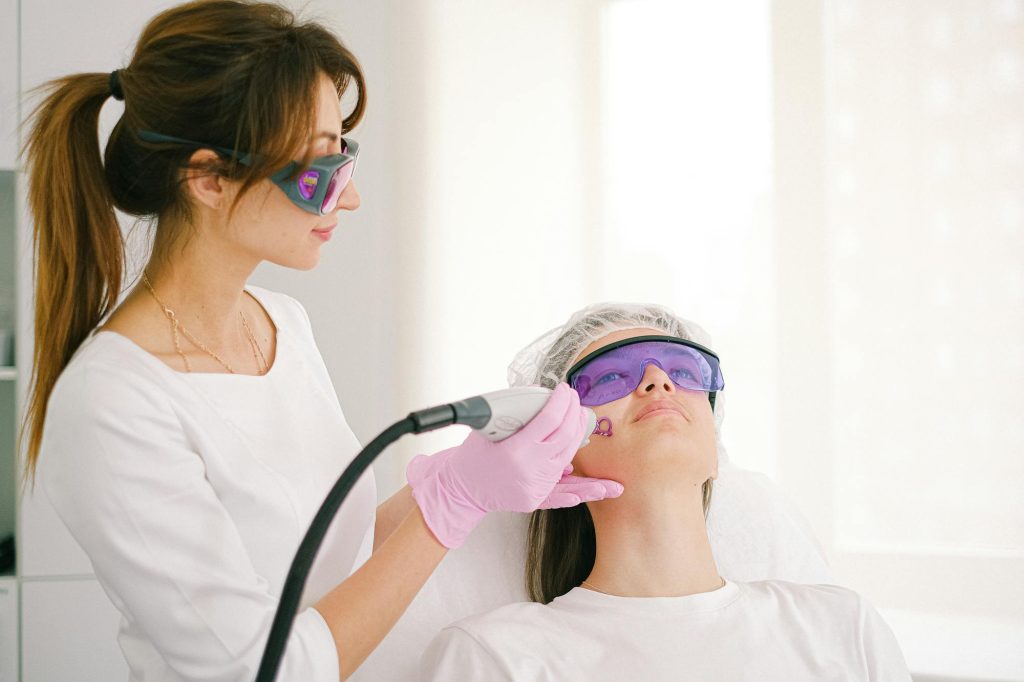
During each treatment session: XTRAC sessions are quick — typically 15 to 20 minutes depending on the number and size of areas being treated. You’ll wear protective eyewear, and your dermatologist or trained technician will position the laser handpiece directly over each affected area, delivering calibrated pulses of 308nm light. Most patients describe the sensation as mild warmth or a brief tingling — not painful, and no anesthesia is required. The laser’s built-in dosimetry system ensures that each treatment area receives the precisely calibrated dose for your skin type and condition severity.
Treatment frequency: Most patients receive XTRAC treatments two to three times per week for 8 to 12 weeks during the initial treatment phase. For psoriasis, a typical course involves 12 to 24 sessions, with visible improvement often appearing within 4 to 8 weeks. For vitiligo, repigmentation is typically slower — most patients need 12 to 20 or more sessions, with gradual color return becoming apparent over several months. After the initial course, many patients transition to maintenance treatments — typically one to two sessions monthly — to sustain their results and prevent flare-ups.
After each session: Treated skin may appear slightly red, similar to a mild sunburn, which typically resolves within hours. You can return to normal activities immediately — there’s no downtime. Your dermatologist will advise you to apply sunscreen to treated areas and avoid excessive sun exposure between sessions, as UV-sensitized skin needs protection.
Why XTRAC Laser May Offer Advantages Over Traditional Phototherapy for Localized Disease
Patients frequently ask how XTRAC compares to traditional whole-body phototherapy booths, and the differences are significant for anyone with localized psoriasis or vitiligo.
Precision vs. broad exposure: Traditional phototherapy booths expose your entire body to UV light — every square inch of skin, whether it has disease or not. For a patient with psoriasis on their elbows and knees, this means 95% of the UV exposure hits healthy skin that doesn’t need treatment. The XTRAC laser treats only the affected areas, which means higher therapeutic doses where they matter and zero unnecessary UV exposure everywhere else.
Reduced cumulative UV risk: Because XTRAC minimizes UV exposure to healthy skin, the cumulative cancer risk from targeted excimer laser therapy may be lower than from whole-body phototherapy based on available evidence. This makes XTRAC a safer option for long-term and repeated treatment courses — particularly relevant for chronic conditions like psoriasis that require ongoing management.
Faster clearance rates: The ability to deliver higher doses directly to diseased skin means XTRAC often achieves clearance faster than whole-body UVB therapy. Many patients see significant improvement in fewer total sessions compared to light booth treatments.
Access to difficult areas: The XTRAC laser’s handheld applicator can reach areas that phototherapy booths treat poorly — the scalp (where hair blocks UV penetration in booths), the hands and feet, genital areas, and skin folds where UV light from booth panels doesn’t reach effectively.
Safe for special populations: XTRAC is safe for pregnant women (no systemic absorption occurs), children, and patients with a personal or family history of skin cancer who need to minimize UV exposure. The AAD notes
that targeted phototherapy devices offer important safety advantages for patients who require long-term phototherapy management.
Combining XTRAC with Other Treatments for Optimal Results
XTRAC laser therapy often produces the best outcomes when integrated into a comprehensive treatment plan rather than used in isolation. Your dermatologist may recommend combining XTRAC with topical corticosteroids applied between sessions to maintain anti-inflammatory effects, topical vitamin D analogues (calcipotriene) that work synergistically with UV therapy to normalize skin cell production, topical calcineurin inhibitors (tacrolimus, pimecrolimus) that are particularly effective when paired with XTRAC for facial vitiligo and sensitive-area psoriasis, or topical retinoids that enhance UV penetration by thinning the outer skin layer covering psoriatic plaques.
For patients with more extensive disease, XTRAC can also complement systemic medications — including biologics and oral immunomodulators — providing targeted treatment for stubborn individual plaques that persist even as systemic therapy controls the broader disease. This combination approach allows your dermatologist to use lower systemic medication doses while achieving better overall clearance.
Side Effects and Safety of XTRAC Laser Treatment
XTRAC laser therapy has an excellent safety profile — one of the best among phototherapy options — because its targeted delivery minimizes systemic UV exposure. Expected temporary effects include mild redness in the treated area (similar to a light sunburn) that resolves within hours, occasional mild warmth or tingling during treatment, and temporary darkening of treated skin that fades over days to weeks. Less common effects include blistering if excessive doses are applied (prevented by careful dosimetry), temporary post-inflammatory hyperpigmentation in darker skin types, and photosensitivity reactions in patients taking certain medications — which is why your dermatologist will review your medication list before beginning therapy.
Long-term safety data spanning decades of excimer laser use shows minimal increased skin cancer risk from XTRAC (far lower than whole-body phototherapy), no systemic toxicity, safety during pregnancy, and suitability for indefinite long-term use without dose-limiting toxicity — an important advantage over systemic medications that may carry cumulative risks.
Considering XTRAC laser for your psoriasis or vitiligo? Our dermatologists will evaluate your condition, review your treatment history, and recommend the approach most likely to produce meaningful improvement. Call (833) 353-2875 or request an appointment online.
Frequently Asked Questions About XTRAC Laser Treatment in New Braunfels
How quickly does XTRAC show results? For psoriasis, many patients see visible improvement within 4 to 8 weeks of beginning treatment, with complete or near-complete clearance typically achieved after 8 to 12 weeks. For vitiligo, repigmentation is a slower process — most patients notice early signs of color return within 2 to 3 months, with progressive improvement continuing over 6 to 12 months of treatment. Your dermatologist will set realistic expectations during your consultation based on your specific condition and the body areas being treated.
Is XTRAC laser treatment painful? No. XTRAC laser treatment is essentially painless. Most patients describe the sensation as mild warmth or a brief tingling during each pulse — far more comfortable than cryotherapy, injections, or other dermatologic procedures. No anesthesia is needed, and most patients find the sessions very tolerable.
Does insurance cover XTRAC laser treatment? XTRAC laser therapy for psoriasis and vitiligo is often covered by insurance when medically necessary, as phototherapy is a recognized standard-of-care treatment for these conditions. Coverage varies by plan and may require prior authorization or documentation of previous treatment failure. Our billing team at Elect Dermatology will verify your specific coverage and discuss any out-of-pocket costs before treatment begins.
Will my psoriasis or vitiligo come back after XTRAC treatment? Psoriasis is a chronic condition, and flare-ups can occur after treatment ends — though they’re often less severe than before treatment. Maintenance sessions (typically one to two per month) significantly reduce recurrence and help sustain clearance long-term. For vitiligo, repigmentation achieved through XTRAC is often well-sustained, though new depigmented patches may develop in previously untreated areas. Your dermatologist will design a maintenance plan based on your individual response.
Is XTRAC safe for children? Yes. XTRAC is a non-systemic, non-invasive treatment with minimal side effects, making it well-suited for children and adolescents with psoriasis or vitiligo. For pediatric patients who need to avoid systemic medications, XTRAC provides an effective alternative with an excellent safety profile.
Can I combine XTRAC with my current psoriasis or vitiligo medications? In most cases, yes — and combination therapy often produces better results than either approach alone. Your dermatologist will review your current treatment regimen and recommend the optimal combination strategy. Common pairings include XTRAC with topical corticosteroids, vitamin D analogues, calcineurin inhibitors, or even systemic medications for patients with more extensive disease.
Get XTRAC Laser Treatment in New Braunfels from a Board-Certified Dermatologist
Psoriasis and vitiligo are challenging conditions — but they’re not untreatable, and you don’t have to keep cycling through creams and pills that aren’t producing the results you need. The right XTRAC laser treatment in New Braunfels from a board-certified dermatologist can deliver the targeted, evidence-based phototherapy that may produce clearance rates beyond what traditional treatments typically achieve.
At Elect Dermatology, Dr. Hockley and Dr. Stahr offer XTRAC laser phototherapy as part of comprehensive treatment plans tailored to your specific condition, disease extent, and treatment goals. Whether you’re dealing with stubborn psoriasis plaques, progressive vitiligo, or localized eczema that hasn’t responded to topical therapy, we’ll evaluate your options and recommend the approach most likely to produce meaningful, lasting improvement.
New patients are welcome, and we’re currently accepting same-week appointments.
Call us today at (833) 353-2875 or request an appointment online. We’re conveniently located at 2154 Gabriels Pl, Ste 103, New Braunfels, TX 78130 — serving patients from across Comal County, including San Marcos, Seguin, Canyon Lake, Schertz, and the greater San Antonio area.
Schedule Your Dermatology Appointment
Our board certified dermatologists in New Braunfels are here to help. New patients are always welcome.