The connection between diet and skin health is supported by a growing body of evidence — and it’s one of the most common topics New Braunfels dermatologists discuss with patients who are doing everything else right but still struggling with their skin. Professional treatments and medical-grade skincare produce the best results when foundational nutrition habits are supporting them. This guide covers what the research actually shows about diet, inflammation, and skin.
The Gut-Skin Axis
Growing evidence supports a bidirectional relationship between the gut microbiome and skin health. A diverse, healthy microbiome is associated with reduced systemic inflammation and improved skin barrier function; dysbiosis (microbiome imbalance) has been linked to inflammatory skin conditions including acne, eczema, and rosacea. A review by Salem et al. (Front Microbiol, 2018) summarizes the current evidence for gut-skin axis interactions across multiple dermatologic conditions.
Foods that support a healthy microbiome include fiber-rich vegetables, legumes, whole grains, and fermented foods containing live cultures. High intake of refined sugar, ultra-processed foods, and excessive alcohol is associated with microbiome disruption. This is an active research area — while the evidence is compelling, the specific dietary interventions most beneficial for particular skin conditions remain an evolving field.
Sugar, Glycemic Index, and Acne
The relationship between high-glycemic diet and acne is one of the better-studied diet-skin connections. High-glycemic foods trigger insulin spikes and elevated insulin-like growth factor-1 (IGF-1), both of which stimulate sebaceous gland activity and androgen production — two key drivers of acne pathogenesis. A randomized controlled trial by Smith et al. (Am J Clin Nutr, 2007) demonstrated significantly improved acne lesion counts in participants following a low-glycemic load diet compared to controls.
Sugar also contributes to glycation — a process in which glucose molecules attach to collagen fibers, creating advanced glycation end products (AGEs) that reduce collagen flexibility and accelerate visible skin aging. The clinical magnitude of dietary glycation’s effect on aging skin is difficult to isolate, but reducing high-glycemic foods benefits both acne and long-term skin quality.
Omega-3 Fatty Acids and Inflammation
Omega-3 polyunsaturated fatty acids (EPA and DHA) have well-documented anti-inflammatory properties relevant to skin health. They compete with arachidonic acid in the inflammatory cascade, reducing the production of pro-inflammatory eicosanoids involved in acne, eczema, and psoriasis. A review by Kiecolt-Glaser et al. (Brain Behav Immun, 2011) establishes the systemic anti-inflammatory mechanisms of omega-3 supplementation, and a randomized, double-blind trial by Jung et al. (Acta Derm Venereol, 2014) found that 10 weeks of omega-3 or gamma-linolenic acid supplementation significantly reduced both inflammatory and non-inflammatory acne lesions.
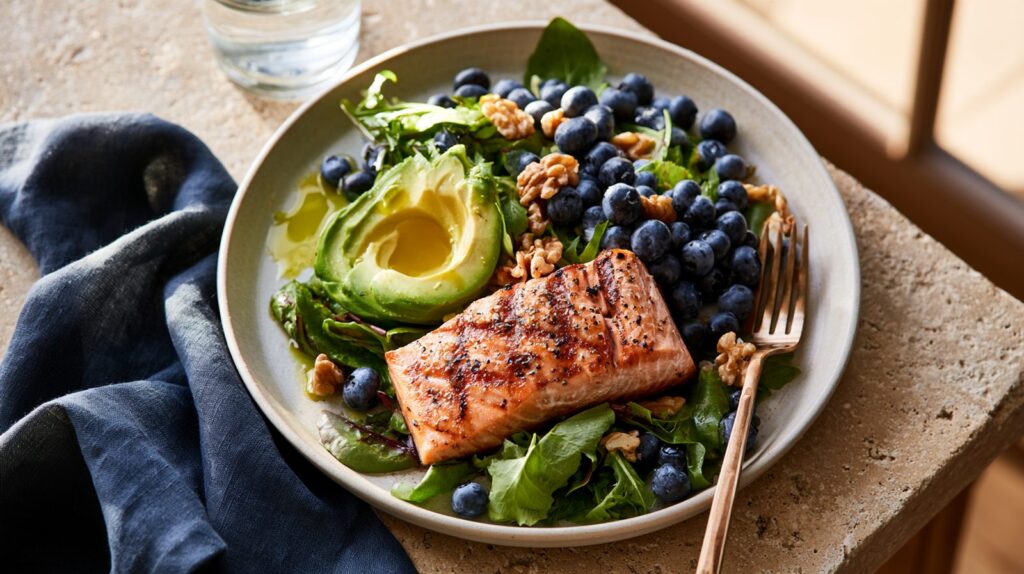
Excellent dietary sources include fatty fish (salmon, sardines, mackerel, herring), walnuts, flaxseeds, and chia seeds. Many Americans consume diets with a high omega-6 to omega-3 ratio, which may favor a pro-inflammatory baseline. Before starting omega-3 supplements, discuss with your physician if you take anticoagulant medications.
Key Vitamins and Minerals for Skin Health
Several micronutrients play direct roles in skin structure and repair. Zinc is required for wound healing, regulation of sebaceous gland activity, and immune function — zinc deficiency can present with acne-like eruptions. Vitamin C is an essential cofactor for collagen synthesis and a significant antioxidant; deficiency impairs collagen production and skin healing. Vitamin A regulates epidermal cell turnover; its prescription-strength derivative tretinoin is a cornerstone of acne and photoaging treatment. Vitamin E works synergistically with vitamin C as a membrane-stabilizing antioxidant. Per the AAD, obtaining these nutrients through whole foods is preferable to supplementation unless a deficiency is documented.
Dairy and Acne: What the Evidence Shows
The dairy-acne connection is more nuanced than popular accounts suggest. Several observational studies have found associations between dairy consumption (particularly skim milk) and acne prevalence, with hormonal content and IGF-1 stimulation as proposed mechanisms. However, the evidence is observational, not from randomized trials, and the association is not universal. A meta-analysis by Juhl et al. (Nutrients, 2018) found a modest positive association between dairy intake and acne, while acknowledging methodological limitations across studies.
For patients with persistent acne who consume dairy regularly, a 6-week elimination trial is a reasonable and low-risk test. If acne improves meaningfully without dairy, it may represent a personal trigger worth avoiding. If there is no change, dairy is likely not a significant factor for that individual.
Anti-Inflammatory Dietary Pattern
The Mediterranean dietary pattern — emphasizing vegetables, legumes, whole grains, fatty fish, olive oil, and nuts while limiting refined carbohydrates, processed foods, and excess alcohol — is the most broadly evidence-supported anti-inflammatory eating pattern. It benefits inflammatory skin conditions (acne, eczema, psoriasis, rosacea) through multiple mechanisms including microbiome support, reduced IGF-1 signaling, and lower systemic inflammatory markers.
Sustainable dietary change produces better long-term results than extreme elimination approaches. Focusing on increasing whole, nutrient-dense foods is often more achievable and maintainable than comprehensive food removal.
Hydration and Skin Barrier Function
Adequate fluid intake supports skin hydration and barrier function, though the relationship between water consumption and skin hydration is more modest than often claimed. Visible dehydration does impair skin appearance, and adequate hydration is one component of overall skin health — but external factors like moisturizer use and humidity have larger direct effects on skin hydration than water intake increases in already-hydrated individuals. Limiting alcohol is relevant here, as it is both a diuretic and a trigger for rosacea and facial flushing in susceptible patients.
Diet as Part of a Comprehensive Skin Plan
Diet is a supporting factor, not a replacement for professional skin care and treatment, and it works alongside other lifestyle factors like stress management. Patients with significant acne, melasma, rosacea, or chronic eczema typically need prescription-strength treatment alongside dietary optimization. At Elect Dermatology, we discuss nutritional habits as part of a holistic evaluation — because the best outcomes come from addressing every contributing factor, not just applying treatments in isolation.
If persistent acne, rosacea, or inflammatory skin conditions aren’t responding fully to treatment, nutritional factors may be part of the picture. The board-certified dermatologists at Elect Dermatology in New Braunfels evaluate your complete skin health history — including dietary factors that may be contributing — and create personalized treatment plans that address every layer of the problem. Call (833) 353-2875 to schedule a consultation at 2154 Gabriels Pl, Ste 103, New Braunfels, TX 78130.
Reviewed by Dr. Hockley
Schedule Your Dermatology Appointment
Our board certified dermatologists in New Braunfels are here to help. New patients are always welcome.