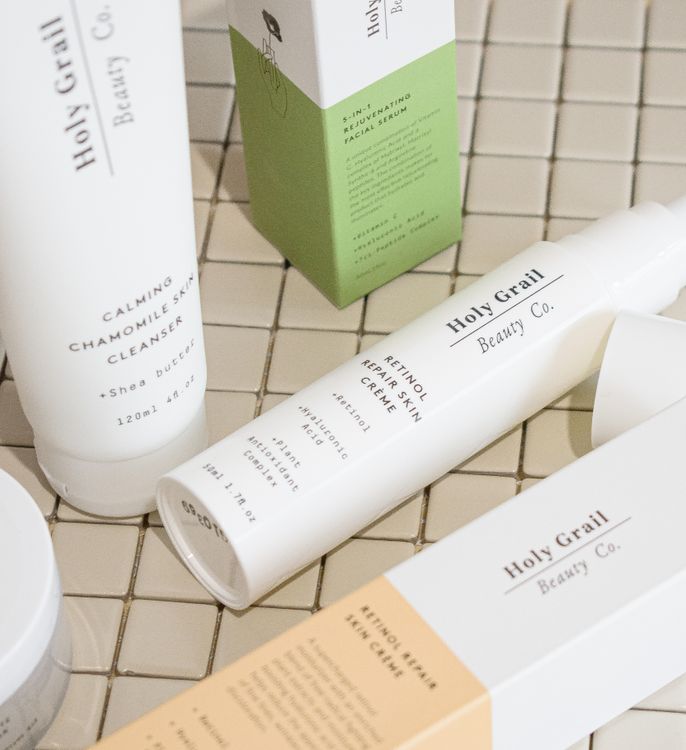
Retinol vs. tretinoin is one of the most common questions patients bring to Elect Dermatology in New Braunfels, TX — and for good reason. Both are vitamin A derivatives with decades of clinical evidence, but they are not the same product, they do not work at the same speed or strength, and choosing between them is not arbitrary. This guide explains the difference and how to choose the right retinoid for your skin.
What Are Retinoids?
Retinoids are a class of compounds derived from vitamin A. They work by binding to nuclear retinoid receptors in skin cells, triggering effects that benefit virtually every skin concern:
- Increased cell turnover: Retinoids accelerate the replacement of older, damaged surface skin cells with newer cells — smoothing texture, reducing fine lines, and normalizing pigmentation.
- Collagen stimulation: Retinoids support fibroblast activity to produce new collagen and inhibit matrix metalloproteinases (enzymes that break down collagen), driving their anti-aging effects. This mechanism is well-established in peer-reviewed dermatology literature.
- Comedolytic activity: Retinoids normalize the shedding of cells inside hair follicles, preventing the plugging that leads to comedones (blackheads, whiteheads) and subsequent inflammatory acne.
- Hyperpigmentation reduction: By accelerating cell turnover and modulating melanocyte activity, retinoids help normalize uneven skin tone, melasma, and post-inflammatory hyperpigmentation.
Is Tretinoin Stronger Than Retinol? The Biochemistry Explained
All retinoids must be converted to retinoic acid — the active form that binds to skin cell receptors — before they produce clinical effects. The critical difference between retinol and tretinoin is how many conversion steps are required:
- Tretinoin (all-trans retinoic acid) is already in its active form. It binds directly to retinoic acid receptors without any conversion — which is why prescription tretinoin works faster and more potently than OTC alternatives.
- Retinol must be converted twice: first to retinaldehyde, then to retinoic acid. Each conversion step reduces the amount of active compound that ultimately reaches skin cell receptors, making retinol significantly less potent than tretinoin at equivalent concentrations — a distinction documented in retinoid metabolism research.
- Retinaldehyde (retinal) requires only one conversion step to retinoic acid — more potent than retinol but less than tretinoin. Available in some OTC products at higher cost.
- Retinyl palmitate and retinyl acetate (found in many drugstore moisturizers) require three conversion steps and are the weakest retinoids. Products marketed as “retinol” sometimes contain these esters — it is worth checking the ingredient label.
Note: OTC retinol percentages (0.025%–1.0%) and prescription tretinoin percentages (0.025%–0.1%) are not directly comparable — the activity difference is primarily driven by the conversion steps, not the concentration number alone.
Retinoid potency, from strongest to weakest:
- Tretinoin — 0 conversion steps (already active); highest potency; prescription only
- Retinaldehyde — 1 conversion step; high potency; OTC (specialty products)
- Retinol — 2 conversion steps; moderate potency; OTC
- Retinyl esters — 3 conversion steps; low potency; OTC (common in moisturizers)
Tretinoin for Acne and Anti-Aging in New Braunfels
Tretinoin is available by prescription only. At Elect Dermatology in New Braunfels, tretinoin is prescribed for acne, photoaging, hyperpigmentation, and general skin texture improvement. Common formulations include 0.025%, 0.05%, and 0.1% in cream or gel vehicles.
Benefits of tretinoin:
- Faster results: Clinical improvements in acne and fine lines are typically visible within 4–8 weeks of consistent use.
- Greater efficacy: Tretinoin has the most extensive published clinical evidence of any topical retinoid — for acne, photoaging reversal, and melasma treatment.
- Standardized potency: Prescription formulations are manufactured and standardized in a way that OTC retinols are not regulated to be.
Managing the retinoid dermatitis adaptation phase: Redness, dryness, peeling, and sensitivity are common in the first 2–6 weeks of tretinoin use. This is a normal adaptation phase, not a signal that tretinoin is too strong for your skin. Key mitigation strategies: start at 0.025% or 0.05%; use every other night for the first 2–4 weeks; apply a ceramide-rich moisturizer after the retinoid absorbs; never apply tretinoin before sun exposure.
Sun sensitivity and sunscreen: Retinoids increase cell turnover, making skin more vulnerable to UV damage during the first weeks of use. Daily broad-spectrum SPF 30+ sunscreen is essential for all patients on prescription tretinoin. With consistent nighttime use and morning SPF, sun exposure during the day is not a reason to stop tretinoin.
Who should consider tretinoin: patients with moderate-to-severe acne; patients with significant photoaging, melasma, or post-inflammatory hyperpigmentation; patients who have plateaued with OTC retinol after 3–6 months; patients who want verified clinical results on a defined timeline.
Retinol vs Tretinoin for Anti-Aging: OTC Retinol Explained
Retinol is widely available over the counter in concentrations typically ranging from 0.025% to 1.0%. Quality varies significantly between products — formulation, vehicle, packaging, and the addition of soothing ingredients all affect how well retinol performs and how well it is tolerated.
Benefits of retinol over tretinoin:
- Available without a prescription
- Generally better tolerated — retinoid dermatitis is less common and less severe
- Wide range of concentrations allows gradual introduction for sensitive skin
- Many formulations pair retinol with hydrating and barrier-supporting ingredients that reduce irritation
Who should consider retinol: patients new to retinoids who want to start gradually; patients with sensitive or reactive skin who cannot tolerate prescription tretinoin; patients maintaining results achieved with a prior tretinoin regimen; patients with mild photoaging or early fine line concerns.
Not Sure Whether Retinol Is Enough for Your Skin?
The board-certified dermatologists at Elect Dermatology in New Braunfels evaluate your skin and prescribe the right retinoid — whether that’s managing acne, reversing photoaging, or treating hyperpigmentation. Most consultations take 20–30 minutes. Same-day prescriptions available.
📞 (833) 353-2875 | 2154 Gabriels Pl, Ste 103, New Braunfels, TX 78130
Serving New Braunfels, San Marcos, Seguin, and Canyon Lake.
Retinol vs Tretinoin for Acne: What About Adapalene (Differin)?
Adapalene (Differin, now available OTC at 0.1%) is a synthetic retinoid with a receptor-binding profile that differs from tretinoin. It is FDA-approved for acne and available without a prescription since 2016. Adapalene is generally better tolerated than tretinoin — making it an excellent first-line option for acne-prone patients, particularly teenagers and first-time retinoid users. While its anti-aging data is less extensive than tretinoin’s, some studies do support adapalene’s role in improving signs of photoaging alongside acne treatment.
Tretinoin itself is not available OTC in the US — prescription products like Retin-A and generic tretinoin require a physician evaluation.
How to Start a Retinoid: Practical Guidance for Beginners
Whether starting OTC retinol or prescription tretinoin, the fundamentals are the same:
- Start low and slow: Begin with the lowest concentration available. Use every other night for the first 4 weeks, then increase frequency as your skin adapts.
- Apply to dry skin: Wait 20–30 minutes after cleansing before applying your retinoid. Wet skin increases penetration and can intensify irritation.
- Moisturize: Apply a ceramide-based moisturizer after your retinoid absorbs, or use the “sandwich” technique (moisturizer → retinoid → moisturizer) for very sensitive skin.
- Wear sunscreen every morning: Non-negotiable with any retinoid. Broad-spectrum SPF 30+ daily.
- Be patient: Meaningful improvement in fine lines and photoaging takes 3–6 months of consistent use. Acne improvement is often visible sooner.
How to Get Tretinoin in New Braunfels, TX
A prescription retinoid evaluation at Elect Dermatology involves a skin assessment, a review of your goals (acne, photoaging, hyperpigmentation, or all three), and selection of the appropriate formulation and concentration for your skin type. Dr. Hockley and Dr. Stahr prescribe tretinoin as part of a comprehensive skincare plan — not as a standalone prescription without context. Same-day prescriptions are available at most appointments.
Frequently Asked Questions
Q: Can I use retinol and tretinoin together?
No. Using both simultaneously provides no additional benefit and significantly increases irritation risk. If transitioning from OTC retinol to prescription tretinoin, simply switch — don’t layer them.
Q: Should I stop retinoids before sun exposure?
Tretinoin and retinol are nighttime products and should not be applied before going outdoors. If you use them at night consistently and wear SPF 30+ every morning, continued sun exposure during the day is not a contraindication.
Q: What is the difference between Retin-A and generic tretinoin?
Retin-A is the brand name for tretinoin. Generic tretinoin is the same active ingredient, equivalent in potency and efficacy, and significantly less expensive. Most patients do equally well with generic tretinoin.
Q: Is tretinoin safe during pregnancy?
Oral retinoids (isotretinoin) are strictly contraindicated in pregnancy. Topical tretinoin is classified Category C (insufficient human data; some animal study concern). The American Academy of Dermatology and most dermatologists recommend discontinuing topical tretinoin during pregnancy as a precaution, given the availability of alternative skincare strategies.
Q: What is the difference between adapalene vs tretinoin for acne?
Both are retinoids with FDA approval for acne. Adapalene is available OTC, generally better tolerated, and an excellent first-line choice. Tretinoin is prescription-only, more potent, and the preferred option for moderate-to-severe acne or photoaging goals. Many patients start with adapalene OTC and step up to prescription tretinoin when they need greater efficacy.
Q: How do I get a tretinoin prescription in New Braunfels?
Schedule an appointment at Elect Dermatology. Dr. Hockley or Dr. Stahr will evaluate your skin, discuss your goals, and prescribe the appropriate retinoid formulation and concentration. Same-day prescriptions are available at most visits.
References
- Mukherjee S, et al. Retinoids in the treatment of skin aging: an overview of clinical efficacy and safety. Clin Interv Aging. 2006;1(4):327-348. PubMed
- Sorg O, et al. Retinoids in cosmeceuticals. Dermatol Ther. 2006. PubMed
- Leyden J, et al. Why topical retinoids are mainstay of therapy for acne. Dermatol Ther (Heidelb). 2017;7(3):293-304. PubMed
- Thielitz A, Gollnick H. Topical retinoids in acne vulgaris: update on efficacy and safety. Am J Clin Dermatol. 2008;9(6):369-381. PubMed
- Zasada M, Budzisz E. Retinoids: active molecules influencing skin structure formation in cosmetic and dermatological treatments. Postepy Dermatol Alergol. 2019;36(4):392-397. PubMed — systematic overview including photosensitivity and conversion pathway data
- American Academy of Dermatology. Retinoids: overview. aad.org
- U.S. FDA. Differin Gel (adapalene 0.1%) OTC approval summary. FDA.gov
Get a Personalized Retinoid Plan in New Braunfels
Not sure whether retinol is strong enough, or if prescription tretinoin is right for your skin? Elect Dermatology in New Braunfels offers personalized retinoid plans for acne, anti-aging, and hyperpigmentation — prescribed by board-certified dermatologists who evaluate your skin before recommending any treatment.
Most visits take 20–30 minutes. Same-day prescriptions available.
📞 (833) 353-2875 | 2154 Gabriels Pl, Ste 103, New Braunfels, TX 78130
Serving New Braunfels, San Marcos, Seguin, and Canyon Lake.
Related Reading
- Medical Dermatology in New Braunfels
- Adult Acne Treatment in New Braunfels
- Teen Acne Treatment: A Parent’s Guide
- Melasma Treatment in New Braunfels
Schedule Your Dermatology Appointment
Our board certified dermatologists in New Braunfels are here to help. New patients are always welcome.