Why Eczema in New Braunfels, TX Is So Hard to Control — and What Actually Works
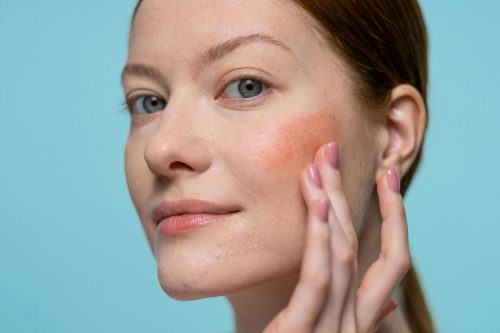
If you’re searching for eczema treatment in New Braunfels, TX, you already know the frustration: the itching that keeps you (or your child) up at night, the cracked and bleeding skin, the endless cycle of flare and remission that no amount of drugstore lotion seems to break. Eczema — known medically as atopic dermatitis — affects roughly 31.6 million Americans according to the National Eczema Association, and it’s one of the most common reasons patients visit a dermatologist.
The challenge with eczema isn’t just treating flares — it’s understanding why they happen and building a long-term management strategy that keeps skin clear between episodes. That requires more than a prescription cream; it requires a dermatologist who understands the disease, the triggers, and the full range of treatments available today.
At Elect Dermatology, our board-certified dermatologists treat eczema patients of all ages across Comal County — from downtown New Braunfels and Gruene to Canyon Lake, San Marcos, Seguin, and the surrounding Hill Country — with individualized treatment plans that address both the symptoms and the underlying cause. We also see patients who travel from as far south as Corpus Christi and Kingsville for specialty dermatology care.
What Is Eczema and What Causes It?
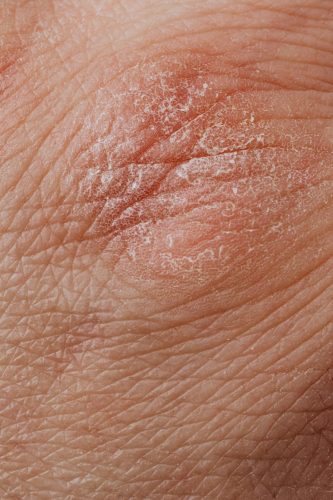
Atopic dermatitis is a chronic inflammatory skin condition driven by two factors: a defective skin barrier and an overactive immune response. In healthy skin, the outermost layer (stratum corneum) acts as a waterproof seal that keeps moisture in and irritants out. In eczema patients, this barrier has gaps — often due to reduced production of a protein called filaggrin — allowing moisture to escape and allergens, bacteria, and irritants to penetrate the skin and trigger inflammation.
The American Academy of Dermatology notes that eczema typically begins in childhood — about 60% of cases develop in the first year of life — but it can start at any age, and many adults develop eczema for the first time in their 20s or 30s. A 2024 comprehensive review published in PMC confirmed that atopic dermatitis remains one of the most common inflammatory skin diseases worldwide, with significant impacts on quality of life and mental health.
Genetics matter — if one or both parents have eczema, asthma, or hay fever, a child is significantly more likely to develop eczema. But genetics alone don’t explain flares. External triggers play an enormous role in determining when eczema gets worse.
Eczema Triggers in Central Texas
Living in the New Braunfels area means dealing with eczema triggers that are specific to our climate and environment:
Cedar pollen (December–February): Mountain cedar season is brutal for eczema patients. The airborne allergens trigger immune responses that worsen skin inflammation, and the associated sinus infections and post-nasal drip can compound the problem.
Extreme heat and humidity (May–September): Sweat is a potent eczema trigger. When sweat sits on eczema-prone skin, it irritates the already-compromised barrier and causes intense itching. The temptation to scratch creates a vicious itch-scratch cycle that damages skin further.
Air conditioning: Running the AC 8+ months a year in Texas means chronically dry indoor air that pulls moisture from eczema-prone skin. Using a humidifier in bedrooms during the dry months can make a meaningful difference.
Hard water: Many areas of Comal County have hard water with high mineral content that can strip the skin’s natural oils and worsen barrier dysfunction.
Swimming: Chlorine in pools — a summer staple in Central Texas — is a common irritant. Rinsing immediately after swimming and applying moisturizer to damp skin can help, but some eczema patients need to limit pool time during active flares.
Eczema Treatment in New Braunfels, TX: How Dermatologists Build a Plan
Effective eczema management follows a step-up approach, starting with foundational skin care and adding treatments based on the severity of the disease. Your dermatologist will customize the plan for your specific situation.
Foundational Skin Care (Every Patient)
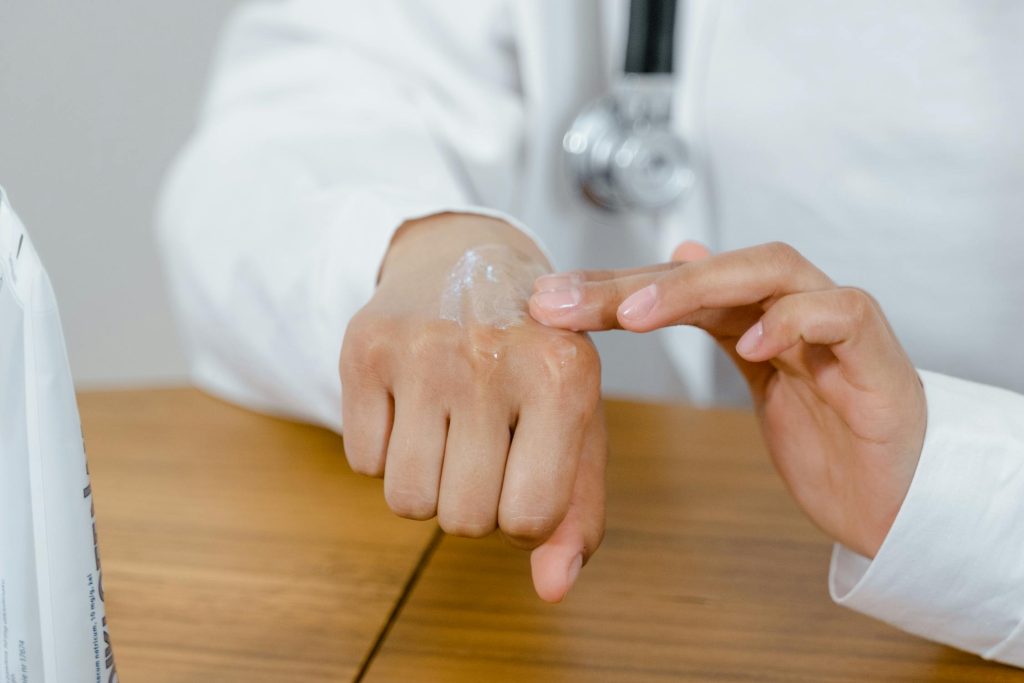
The foundation of every eczema treatment plan is repairing and maintaining the skin barrier. This means bathing daily in lukewarm water for 5 to 10 minutes (not hot water, which strips natural oils), patting skin damp (not rubbing dry), and immediately applying a thick, fragrance-free moisturizer to seal in hydration. The AAD calls this “soak and seal” — and it’s more important than most patients realize. Moisturizers like CeraVe, Vanicream, and Eucerin are dermatologist favorites because they contain ceramides that help restore the skin barrier.
Topical Medications
When moisturizing alone isn’t enough, prescription topicals are the first line of active treatment:
Topical corticosteroids remain the mainstay of eczema treatment — available in a range of potencies from mild (for the face and skin folds) to high-potency (for thick plaques on the body). Your dermatologist will select the right strength for each body area and provide clear instructions on duration of use to minimize side effects.
Topical calcineurin inhibitors (tacrolimus and pimecrolimus) are steroid-free options that are especially useful for sensitive areas like the face, eyelids, and groin where prolonged steroid use isn’t recommended.
Crisaborole (Eucrisa) is a topical PDE4 inhibitor FDA-approved for mild to moderate eczema in patients 3 months and older — one of the newer non-steroid options.
Ruxolitinib (Opzelura) is a topical JAK inhibitor FDA-approved for mild to moderate atopic dermatitis in patients 12 and older, offering a new mechanism of action for patients who don’t respond to traditional topicals.
Phototherapy
For moderate eczema that doesn’t respond well to topicals alone, narrowband UVB phototherapy can reduce inflammation and itching. It’s particularly useful for patients with widespread eczema who would need to apply topical medications to large body surface areas. Sessions are typically 2 to 3 times per week for 2 to 3 months.
Systemic and Biologic Medications
For moderate to severe eczema that can’t be controlled with topicals and phototherapy, systemic treatments offer relief:
Dupilumab (Dupixent) was the first biologic approved specifically for atopic dermatitis and has transformed the treatment of severe eczema. It targets IL-4 and IL-13 — two immune proteins that drive eczema inflammation — and is FDA-approved for patients 6 months and older. Clinical trials show that most patients experience at least 75% skin clearance.
JAK inhibitors like upadacitinib (Rinvoq) and abrocitinib (Cibinqo) are oral medications that offer rapid improvement — many patients notice significant relief within the first 1 to 2 weeks. A 2024 systematic review of eczema management guidelines highlights these newer therapies as important additions to the treatment landscape, particularly for patients with moderate to severe disease.
When to See a Dermatologist for Eczema
Many mild cases of eczema can be managed by a primary care physician. But you should see a dermatologist when:
Your current treatment isn’t working. If you’ve been using over-the-counter creams or even prescription topicals from your PCP and your eczema isn’t improving after 2 to 4 weeks, a dermatologist can reassess the diagnosis and offer more effective options.
You’re having frequent flares. More than 3 to 4 significant flares per year suggests your baseline management needs adjustment — not just more rescue treatment during flares.
Your eczema is affecting your sleep or daily life. Eczema that disrupts sleep, limits activities, or causes significant stress or embarrassment deserves aggressive treatment. You don’t have to “live with it.”
You’re developing skin infections. Cracked, open eczema skin is vulnerable to bacterial infections (often staph), which appear as weeping, crusting, or increased redness. These need prompt treatment to prevent complications.
Frequently Asked Questions About Eczema Treatment in New Braunfels
Is eczema the same as dry skin?
No. Dry skin is uncomfortable but temporary. Eczema is a chronic inflammatory disease involving immune dysfunction and barrier defects. While moisturizing helps both conditions, eczema often requires prescription treatment to control the underlying inflammation.
Are topical steroids safe for long-term use?
When used as directed by a dermatologist — right potency, right duration, right body area — topical steroids are safe and effective. Problems arise when high-potency steroids are used incorrectly (wrong area, too long, without medical guidance). Your dermatologist will create a specific plan that balances effectiveness with safety.
Can diet affect eczema?
For some patients — particularly young children — food allergies can trigger eczema flares. However, restrictive elimination diets should never be started without medical guidance. Most adult eczema is not driven by food allergies, and unnecessarily restricting diet can cause nutritional problems without improving skin.
Will my child outgrow eczema?
Many children do see their eczema improve significantly by adolescence. However, about 30% continue to have symptoms into adulthood. Effective treatment during childhood prevents complications, reduces scarring, and dramatically improves quality of life regardless of long-term outcome.
How much does eczema treatment cost?
Topical treatments are typically covered by insurance with modest copays. Biologic medications like Dupixent have manufacturer assistance programs that can reduce costs significantly — in some cases to $0 per month. Our staff at Elect Dermatology will help navigate insurance coverage and assistance programs for every patient.
Get Expert Eczema Treatment in New Braunfels, TX
Looking for expert eczema treatment in New Braunfels, TX? The board-certified dermatologists at Elect Dermatology treat children and adults with personalized eczema care — from optimized moisturizing routines and prescription topicals to cutting-edge biologics that can achieve near-complete clearance. You don’t have to keep cycling through drugstore products hoping something sticks.
At Elect Dermatology, Dr. Hockley and Dr. Stahr will evaluate your skin, identify your specific triggers, explain your options honestly, and build a management plan that actually works for your life and your budget.
New patients are welcome, and we’re currently accepting same-week appointments.
Call us today at (833) 353-2875 or request an appointment online. We’re conveniently located at 2154 Gabriels Pl, Ste 103, New Braunfels, TX 78130 — serving patients from across Comal County, including San Marcos, Seguin, Canyon Lake, Schertz, and the greater San Antonio area.
Schedule Your Dermatology Appointment
Our board certified dermatologists in New Braunfels are here to help. New patients are always welcome.