Winter dry skin — medically called xerosis — becomes a significant skin health issue every fall and winter, even in Central Texas. While New Braunfels doesn’t face the brutal winters of northern climates, the seasonal drop in humidity, use of indoor heating, and behavioral changes like hotter showers still compromise the skin barrier enough to cause tightness, flaking, and persistent itching. Dry skin treatment from a New Braunfels dermatologist goes beyond recommending a generic moisturizer — it identifies the underlying cause of your barrier dysfunction and selects evidence-based ingredients and formulations proven to repair it.
Why Winter Causes Dry Skin: The Physiology
The skin barrier — primarily the stratum corneum — maintains skin hydration through a combination of natural moisturizing factors (NMFs), intercellular lipids (ceramides, free fatty acids, cholesterol), and a functional tight-junction network. Winter disrupts each of these components:
- Low ambient humidity: Cold air holds less water vapor. As humidity drops, the concentration gradient driving transepidermal water loss (TEWL) increases — skin loses moisture to the surrounding air faster.
- Indoor heating: Forced-air heating further strips interior humidity, compounding outdoor dryness.
- Hot showers: Hot water removes intercellular lipids (particularly ceramides) and surface sebum, directly weakening barrier function. The damage is proportional to water temperature and duration.
Patients with atopic dermatitis (eczema), ichthyosis, or psoriasis are especially vulnerable because their barrier function is already compromised at baseline. For these patients, winter often triggers significant flares requiring prescription management.
Choosing the Right Moisturizer: Humectants, Emollients, and Occlusives
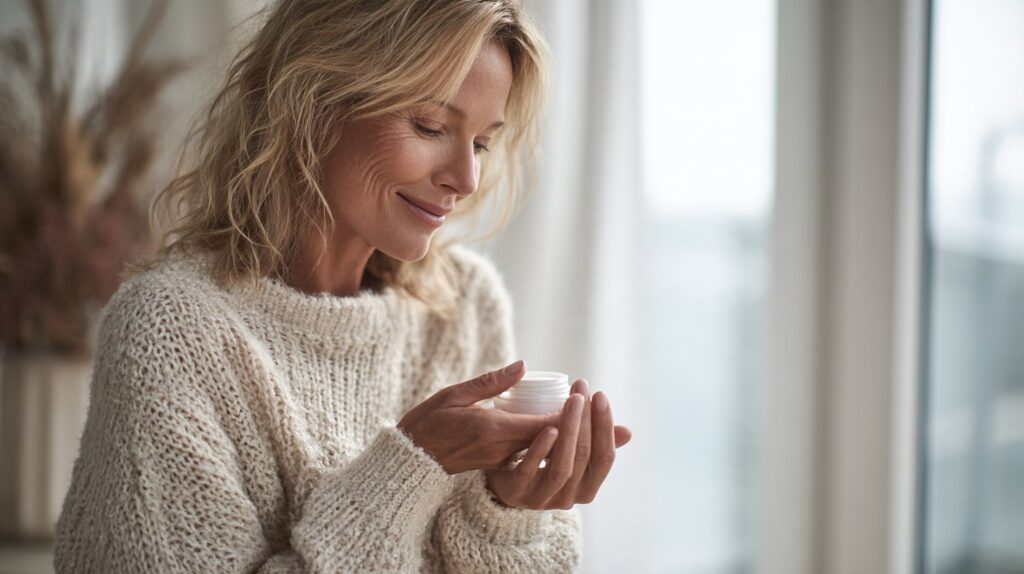
The three functional categories of moisturizer ingredients work differently and should be selected based on your skin’s specific needs:
Humectants (glycerin, hyaluronic acid, urea at low concentrations, propylene glycol) draw water into the stratum corneum. They are effective when there is ambient moisture to attract — in very dry indoor environments they can paradoxically pull water from deeper skin layers. Best used in combination with occlusives.
Emollients (ceramides, shea butter, squalane, fatty acids) fill in the spaces between corneocytes, restoring the smooth, flexible quality of healthy skin. Ceramide-containing formulations specifically address the most common lipid deficit in dry and eczematous skin. As Lodén (Am J Clin Dermatol, 2003) reviews, moisturizers that supply the skin’s own barrier lipids can reduce transepidermal water loss and improve barrier function in dry-skin disorders, rather than simply softening the surface.
Occlusives (petrolatum, dimethicone, lanolin) create a physical barrier on the skin surface that prevents water evaporation. Petrolatum remains the most effective single occlusive agent available. In severe xerosis, applying petrolatum-based products over a ceramide cream (“wet wrap” or layering technique) provides the most complete barrier repair.
For severe scale: Ammonium lactate 12% lotion and urea 10–40% formulations are keratolytic — they break down the protein bonds in thick, scaly stratum corneum and allow shedding of buildup. These prescription-strength formulations are significantly more effective than OTC options for ichthyotic or severely xerotic skin.
Application Technique Matters
Apply moisturizer to damp skin within 3 minutes of exiting the shower — this window allows humectants to bind existing surface water before evaporation. Pat (do not rub) dry, then apply moisturizer immediately. For severely dry hands or feet, apply petrolatum at night and cover with cotton gloves or socks to maximize overnight occlusion.
What NOT to Do
- Avoid fragrance and alcohol in moisturizers — both are skin barrier irritants
- Reduce shower temperature to lukewarm and limit duration to 5–10 minutes
- Do not start or increase retinoid use in winter without medical guidance — retinoids initially worsen barrier function and can significantly exacerbate xerosis. If you use tretinoin, consider reducing frequency (every other night) during dry winter months and always use the “sandwich” technique (moisturizer → retinoid → moisturizer)
- Avoid over-washing hands in winter — every wash strips natural oils
Prescription Treatments for Severe Dry Skin
When OTC moisturizers are insufficient, dermatologist-prescribed options provide substantially more powerful intervention:
Ammonium lactate 12% (Lac-Hydrin): Prescription-strength keratolytic and humectant for severe scale and ichthyosis-type dryness.
Topical corticosteroids: For eczematous xerosis with active inflammation and itch — not for simple dry skin, but essential when there’s an inflammatory component.
Topical calcineurin inhibitors (tacrolimus, pimecrolimus): Non-steroidal anti-inflammatory options for eczema-related dryness, especially on the face.
For itch management: Oral antihistamines (cetirizine, loratadine) for itch-driven sleep disruption. Dupilumab (Dupixent) for moderate-to-severe atopic dermatitis with itch and xerosis that fails topical therapy.
Note: oral medications for simple xerosis (no inflammatory component, no eczema) are not routinely indicated. Oral interventions are reserved for patients with underlying skin disease driving the dryness.
When to See a Dermatologist
Contact Elect Dermatology if:
- Dry skin doesn’t improve with consistent moisturizer use after 2–3 weeks
- Severe itching is disrupting sleep or daily life
- Dryness is accompanied by redness, oozing, or crusting — which may indicate eczema, psoriasis, or contact dermatitis rather than simple xerosis
- You have widespread or worsening skin thickening or scale
- You have a history of eczema or psoriasis and are experiencing a flare
Related Reading
More on itchy, irritated skin from our New Braunfels dermatologists: our guide to eczema flare-ups in Central Texas covers the barrier disease that winter dryness most often unmasks; why your skin itches when there is no rash explains when xerosis is the cause and when it is not; and our medical dermatology services page describes the full range of conditions we diagnose and treat.
References
- Lodén M. Role of topical emollients and moisturizers in the treatment of dry skin barrier disorders. Am J Clin Dermatol. 2003;4(11):771–788. PubMed
- Elias PM, Wakefield JS. Therapeutic implications of a barrier-based pathogenesis of atopic dermatitis. Clin Rev Allergy Immunol. 2011;41(3):282–295. PubMed
- American Academy of Dermatology. Dermatologists’ top tips for relieving dry skin. AAD.org
- Meckfessel MH, Brandt S. The structure, function, and importance of ceramides in skin and their use as therapeutic agents in skin-care products. J Am Acad Dermatol. 2014;71(1):177–184. PubMed
Itchy, tight, or flaking skin this winter? The board-certified dermatologists at Elect Dermatology in New Braunfels can identify whether you have simple xerosis or an underlying skin condition — and build a precise treatment plan using the right moisturizer ingredients, prescription formulations, and barrier-repair strategies for your skin. Call (833) 353-2875 to schedule at 2154 Gabriels Pl, Ste 103, New Braunfels, TX 78130. Most dry skin is very treatable — you shouldn’t have to suffer through winter.
Reviewed by Dr. Stahr
Schedule Your Dermatology Appointment
Our board certified dermatologists in New Braunfels are here to help. New patients are always welcome.