
When Should a New Braunfels Parent Take Their Child to a Dermatologist?
If you’re searching for a pediatric dermatologist in New Braunfels, it’s probably because your child has a skin issue that isn’t going away — and you’ve realized that the pediatrician’s standard advice isn’t getting the job done. You’re not alone. Skin conditions are one of the top five reasons children visit a doctor in the United States, and many of them require specialized care that goes beyond what a general pediatrician is trained to provide.
The American Academy of Dermatology notes that children can develop virtually any skin condition that adults can — plus several that are unique to childhood. From stubborn eczema and widespread warts to suspicious moles and unexplained rashes, a board-certified dermatologist has the training to diagnose accurately, treat effectively, and spare your child unnecessary discomfort.
At Elect Dermatology, Dr. Hockley and Dr. Stahr see pediatric patients of all ages across Comal County — from downtown New Braunfels and Gruene to Canyon Lake, San Marcos, Seguin, and the surrounding Hill Country. We understand that treating kids requires a different approach than treating adults — more patience, more explanation, and a gentler touch.
Common Childhood Skin Conditions a Pediatric Dermatologist in New Braunfels Treats
Eczema (Atopic Dermatitis)
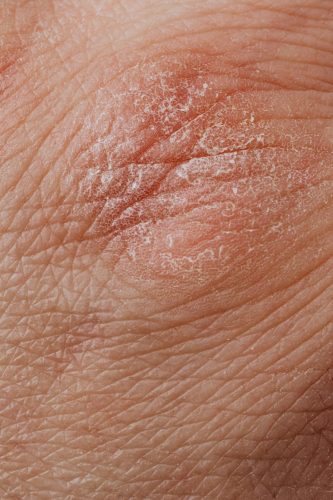
Eczema is the most common chronic skin condition in children, affecting roughly 13% of kids in the United States according to the National Eczema Association. It typically appears as itchy, red, dry patches on the cheeks, arms, and legs in babies, and in the creases of elbows and knees in older children. Most cases start before age 5.
Mild eczema can often be managed with moisturizers and gentle skincare. But moderate to severe eczema — the kind that keeps your child up at night scratching, causes skin infections, or doesn’t respond to over-the-counter creams — needs a dermatologist. The AAD recommends that children with persistent or severe eczema see a dermatologist for a personalized treatment plan that may include prescription topicals, wet wrap therapy, or newer targeted medications.
Warts and Molluscum Contagiosum
Warts (caused by HPV) and molluscum contagiosum (caused by a poxvirus) are extremely common in school-aged children. While both are generally harmless and can resolve on their own — and watchful waiting is sometimes the right approach for molluscum — they’re also contagious, can spread across the body, and are a source of embarrassment and frustration for kids and parents alike.
A dermatologist can treat warts with cryotherapy (liquid nitrogen), topical medications, or other targeted approaches — far more effective than the drugstore freeze kits that rarely work on stubborn warts. Molluscum can be treated with curettage, cantharidin (a blistering agent applied in-office), or topical retinoids.
Acne in Teens and Preteens
Acne is the most common skin condition in the United States, and it often begins earlier than parents expect — sometimes as young as 8 or 9 during early puberty. By the teenage years, nearly 85% of adolescents have some degree of acne. While mild acne can be managed with over-the-counter products, moderate to severe acne — especially cystic acne — can cause permanent scarring if not treated properly and early.
A dermatologist can prescribe treatments that aren’t available over the counter, including topical retinoids, prescription-strength benzoyl peroxide combinations, oral antibiotics, hormonal therapies for teenage girls, and isotretinoin (Accutane) for severe, scarring acne. Early intervention prevents both physical scars and the significant emotional toll acne takes on teenagers.
Birthmarks and Moles
Most birthmarks and moles in children are harmless, but some require monitoring or treatment. Large congenital melanocytic nevi (moles present at birth) carry an increased risk of melanoma and should be evaluated by a dermatologist. Hemangiomas — the bright red “strawberry marks” that appear in the first weeks of life — sometimes require treatment if they grow rapidly or are located near the eyes, nose, or mouth where they can interfere with function.
The AAD recommends that parents have a dermatologist evaluate any mole that is changing in size, shape, or color, or any new mole that looks different from the child’s other moles.
Fungal Infections
Ringworm of the scalp (tinea capitis) is common in children and often misdiagnosed as dandruff or eczema. Unlike ringworm on the body, scalp ringworm requires oral antifungal medication — topical creams alone won’t reach the hair follicle. Athlete’s foot and jock itch are also common in active, athletic kids. A dermatologist can confirm the diagnosis and prescribe the right treatment.
Contact Dermatitis and Allergic Rashes
Children can develop allergic reactions to any number of substances — nickel in jewelry, fragrances in soaps, preservatives in sunscreens, poison ivy, and latex, among others. When a rash keeps coming back and you can’t figure out the trigger, a dermatologist can perform patch testing to identify the specific allergen and help you avoid it.
When to See a Dermatologist vs. Your Pediatrician
Your pediatrician is a great first stop for mild skin concerns. But you should see a dermatologist when:
The condition isn’t responding to treatment. If your pediatrician’s prescribed cream hasn’t worked after 2 to 4 weeks, it’s time for a specialist who can escalate treatment or reconsider the diagnosis.
The diagnosis is uncertain. Pediatricians see a wide range of conditions, but skin disease is the dermatologist’s entire specialty. Rashes that look similar can have very different causes, and an accurate diagnosis is the foundation of effective treatment.
Your child has severe or widespread disease. Severe eczema, cystic acne, extensive warts, or any condition causing significant discomfort or affecting your child’s quality of life warrants a dermatologist’s expertise.
There’s a concerning mole or growth. Any mole that’s changing, bleeding, or looks unusual should be evaluated by a dermatologist — not because it’s likely cancer (melanoma in children is rare), but because early evaluation provides peace of mind and catches the rare cases that do need attention.
What to Expect at Your Child’s Dermatology Appointment
We know that doctor visits can be stressful for kids — and for parents. Here’s what a pediatric dermatology appointment at Elect Dermatology looks like:
Before the visit: Don’t apply any creams or medications to the affected area the morning of the appointment — your dermatologist needs to see the skin in its current state. Bring a list of any products you’ve tried and any medications your child takes.
The exam: Your dermatologist will examine the affected skin and may use a dermatoscope (a handheld magnifying device with polarized light) for a closer look. We’ll explain what we’re seeing in plain language and answer your questions thoroughly. For younger children, parents stay in the room throughout the visit.
Treatment plan: We’ll discuss treatment options, explain the pros and cons of each, and work with you to choose a plan that fits your child’s age, severity, and your family’s preferences. For children, we’re especially thoughtful about treatment comfort — we avoid painful procedures whenever possible and use numbing creams when we can’t.
Frequently Asked Questions About Pediatric Dermatology
What age can a child see a dermatologist?
There’s no minimum age. We see infants, toddlers, school-aged children, and teenagers. Some conditions — like hemangiomas and severe eczema — are best addressed in the first months of life.
Does my child need a referral to see a dermatologist?
Most insurance plans do not require a referral to see a dermatologist, though some HMO plans do. Our front desk team can help verify your child’s coverage before the appointment.
Is eczema something my child will outgrow?
Many children do see their eczema improve or resolve by adolescence — but not all. About 30% of children with eczema continue to have symptoms into adulthood. Either way, managing eczema effectively during childhood prevents skin infections, reduces scarring, and dramatically improves your child’s comfort and quality of life.
Should I be worried about my child’s moles?
Most moles in children are normal. However, any mole that changes rapidly in size, shape, or color, or that looks very different from your child’s other moles, should be evaluated. Annual skin checks are a good habit to establish, especially for fair-skinned children with a family history of melanoma.
Can teenagers get Accutane for severe acne?
Yes. Isotretinoin (commonly known by the former brand name Accutane) is FDA-approved for severe, nodular acne in patients 12 years and older. It requires careful monitoring and a commitment to the iPLEDGE program, but for the right patients, it can be life-changing. Your dermatologist will discuss whether it’s appropriate for your teen.
Schedule Your Child’s Dermatology Appointment in New Braunfels
Your child’s skin condition doesn’t have to be something you just “wait out” or manage with guesswork. A board-certified dermatologist in New Braunfels can provide an accurate diagnosis, effective treatment, and the peace of mind that comes from knowing your child is getting the right care.
At Elect Dermatology, Dr. Hockley and Dr. Stahr have experience treating patients of all ages, from infants to teenagers. We take the time to make kids comfortable, explain everything to parents clearly, and create treatment plans that are practical for busy families.
New patients are welcome, and we’re currently accepting same-week appointments.
Call us today at (833) 353-2875 or request an appointment online. We’re conveniently located at 2154 Gabriels Pl, Ste 103, New Braunfels, TX 78130 — serving patients from across Comal County, including San Marcos, Seguin, Canyon Lake, Schertz, and the greater San Antonio area.
Schedule Your Dermatology Appointment
Our board certified dermatologists in New Braunfels are here to help. New patients are always welcome.