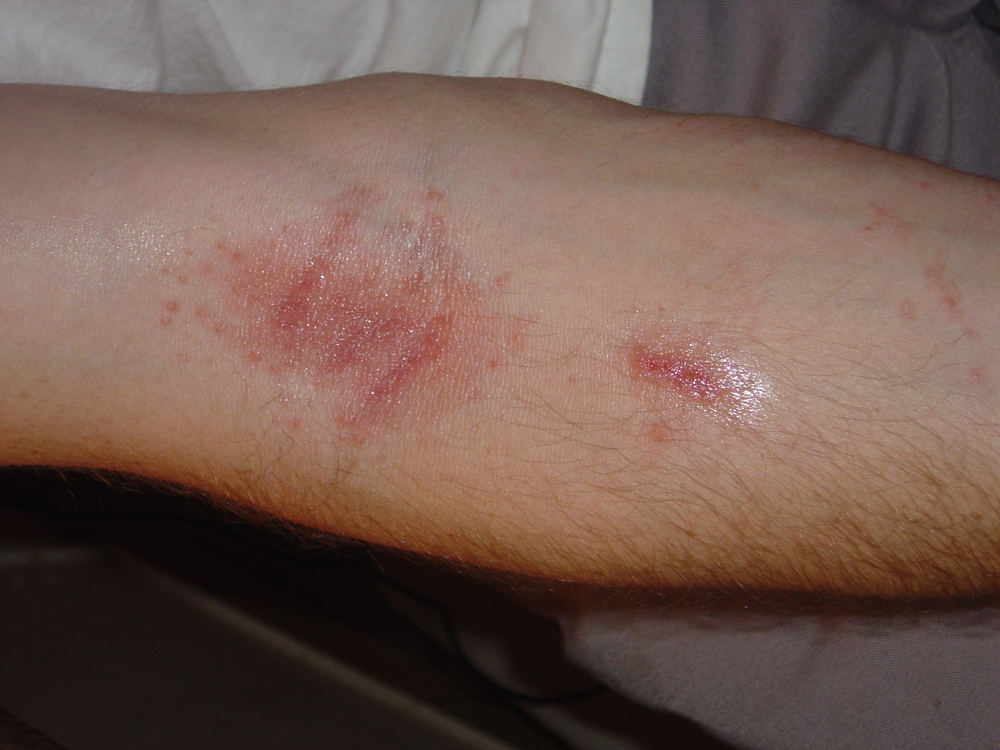
Contact Dermatitis: Identifying and Treating Allergic Rashes in New Braunfels, TX
Contact dermatitis treatment in New Braunfels, TX is available at Elect Dermatology for patients dealing with persistent, itchy rashes that won’t resolve on their own. Contact dermatitis is one of the most common skin conditions evaluated in dermatology — it accounts for a significant proportion of all occupational skin disease and affects people of all ages. Despite being common, it’s frequently misdiagnosed as eczema, and patients spend months or years managing symptoms without ever identifying the substance causing them.
The most important thing to know about contact dermatitis: medication alone is rarely the complete answer. Identifying and eliminating the trigger is what produces lasting relief.
What Is Contact Dermatitis? Two Very Different Subtypes
Contact dermatitis has two fundamentally distinct forms with different immune mechanisms, different triggers, and different management approaches. Understanding which type you have determines the appropriate treatment path.
Irritant Contact Dermatitis (ICD) accounts for approximately 80% of cases. It occurs when a chemical or physical agent directly damages the skin’s protective barrier — no immune involvement, no prior sensitization required. Anyone can develop ICD with sufficient exposure to a strong enough irritant. Common culprits include soaps and detergents, solvents, cleaning products, repeated water exposure, and friction. ICD is most common on the hands and is a significant occupational disease burden for healthcare workers, hair stylists, food service workers, and others with high-frequency hand washing or chemical exposure.
Allergic Contact Dermatitis (ACD) accounts for roughly 20% of cases but involves a true immune response — specifically a Type IV delayed-type hypersensitivity reaction. The immune system becomes sensitized to a specific substance (called a hapten) during initial exposure. Subsequent exposures trigger an inflammatory cascade that typically peaks 24–96 hours after contact. ACD requires prior sensitization, which means a person can suddenly develop an allergy to something they’ve used for years without any prior reaction.
Common Contact Allergens: What Triggers ACD in New Braunfels Patients
Dermatologists in New Braunfels and Central Texas see the full spectrum of contact allergens. The most clinically important include:
- Nickel: The most common contact allergen worldwide. Found in jewelry, belt buckles, watchbands, phone cases, buttons, and some electronic devices. Classic presentation: rash at earlobes, wrists, belt line, or neck.
- Fragrances: Found in perfumes, cosmetics, lotions, shampoos, and household products. Fragrance mix and Balsam of Peru are common positive patch test results.
- Preservatives: Methylisothiazolinone (MI) and methylchloroisothiazolinone (MCI) — found in many personal care products and now among the most common patch test allergens. Formaldehyde and formaldehyde-releasing preservatives (quaternium-15, DMDM hydantoin) are also important.
- Rubber accelerators: Thiuram compounds and carbamates found in latex gloves, elastic waistbands, condoms, and rubber-handled equipment.
- Neomycin and bacitracin: Ingredients in over-the-counter triple antibiotic ointments. Patients paradoxically develop allergies to these while treating wounds — a cause of worsening rather than healing skin.
- Poison ivy / oak / sumac (urushiol): The most potent contact allergen in the United States. In New Braunfels, common triggers include exposure along the Guadalupe River, Canyon Lake, and wooded areas throughout the Hill Country. Urushiol can transfer via tools, clothing, and pet fur long after direct plant contact.
- Hair dye (PPD): Para-phenylenediamine in permanent hair dyes can cause severe reactions at the scalp, forehead, and face.
- Airborne contact allergens: Fragrances, essential oils, and plant allergens (including Compositae/Asteraceae family — ragweed, chrysanthemum) can cause contact dermatitis via airborne exposure, typically affecting exposed skin on the face, neck, and forearms without a clear direct contact pattern.
Recognizing Contact Dermatitis: Symptoms and Distribution Patterns
The distribution and pattern of a contact dermatitis rash often points directly to its cause — which is why detailed history-taking and physical examination by a physician is so valuable in diagnosis.
Classic ACD presents as an intensely itchy, red, vesicular (small blistering), weeping rash at the area of contact. With chronic repeated exposure, the rash may become lichenified — thickened and leathery rather than vesicular. Irritant contact dermatitis more commonly causes dryness, cracking, scaling, and pain rather than intense itch, particularly on the hands.
Pattern clues that guide diagnosis:
- Eyelid rash → nail polish allergens (transferred by touching face), eye drops, airborne fragrances, cosmetics
- Ears and neck → nickel jewelry, fragrance, hair care products
- Belt-line rash → belt buckle (nickel), waistband rubber accelerators
- Hand and wrist rash → occupational irritants or allergens, watchbands, rubber gloves
- Foot rash → rubber accelerators in shoes, leather chromium
- Widespread facial rash → airborne exposure, fragrance, newly introduced skincare product
Patch Testing in New Braunfels: The Gold Standard for ACD Diagnosis
When allergic contact dermatitis is suspected and the trigger isn’t immediately obvious from history, patch testing is the definitive diagnostic tool. Patch testing at Elect Dermatology involves applying small amounts of standardized allergens under occlusive patches on the patient’s back, left in place for 48 hours, with readings taken at 48 and 96 hours.
The North American Contact Dermatitis Group (NACDG) standard panel includes over 70 of the most clinically relevant contact allergens. A positive reaction produces a localized eczematous response at the specific allergen site — confirming sensitization to that substance.
Patch testing in New Braunfels can identify the exact substance driving a rash that has failed to resolve with repeated treatment. This is distinct from allergy prick/scratch testing, which tests IgE-mediated immediate (Type I) reactions to foods and environmental allergens. Patch testing specifically diagnoses the Type IV delayed hypersensitivity mechanism underlying ACD.
Contact Dermatitis Treatment at Elect Dermatology
The single most important treatment step is identifying and eliminating the causative substance. No topical or systemic medication will produce lasting control if the trigger remains part of daily life. Once the allergen or irritant is identified, treatment focuses on controlling existing inflammation and supporting barrier recovery.
Topical Corticosteroids: The mainstay of acute treatment. Low-potency steroids (hydrocortisone) for sensitive areas including the face, eyelids, and groin; mid-to-high potency for the trunk and extremities; super-potent formulations for thickened chronic dermatitis on hands and feet. Duration is limited to prevent skin thinning (atrophy).
Topical Calcineurin Inhibitors: Tacrolimus ointment and pimecrolimus cream are steroid-free anti-inflammatory options especially valuable for long-term management of facial or eyelid contact dermatitis where chronic steroid use carries the highest atrophy risk.
Systemic Corticosteroids: For severe or widespread acute ACD — significant poison ivy/oak reactions are the most common indication — a tapering course of oral prednisone (typically 10–14 days to prevent rebound flare) provides rapid, effective relief. The course must be long enough to avoid rebound.
Barrier Repair: Ceramide-rich moisturizers (Vanicream, CeraVe, Eucerin) support recovery of the skin barrier disrupted by both irritant and allergic contact dermatitis. These products are intentionally free of fragrances and common sensitizers.
Systemic Immunosuppressants: For chronic, recalcitrant ACD not adequately controlled with topical treatment — methotrexate, azathioprine, or dupilumab (FDA-approved for atopic dermatitis and used off-label with emerging evidence for allergic contact dermatitis) may be considered in appropriate patients.
Building Your Personal Allergen Avoidance Plan
Identifying your allergen through patch testing is only half the solution — understanding every product and material that contains it is equally critical. After positive patch test results, Elect Dermatology provides patients with a personalized avoidance list based on their specific positive reactions. We recommend fragrance-free, preservative-free, or otherwise sensitizer-free alternatives tailored to each patient’s lifestyle and occupational exposures.
Frequently Asked Questions: Contact Dermatitis
Q: How do I know if my rash is contact dermatitis or eczema?
Both produce itchy, inflamed skin and can coexist. Contact dermatitis typically has a distribution pattern corresponding to a contact area and often appears in adults without childhood eczema history. Atopic dermatitis typically begins in childhood, involves flexural areas, and has a family history pattern. Patch testing helps identify when ACD is complicating or driving a rash that looks like eczema.
Q: Can I develop contact dermatitis to something I’ve used for years?
Yes — this is one of the most confusing aspects of ACD. Sensitization can develop at any point during repeated exposure. It is entirely possible to suddenly develop a reaction to a product you’ve used without issue for years.
Q: Is contact dermatitis curable?
Irritant contact dermatitis resolves completely once the irritant is removed and the skin barrier heals. Allergic sensitization is typically permanent — immune memory persists. However, strict, complete avoidance of the confirmed allergen prevents recurrence effectively.
Q: Will my rash spread to areas that didn’t contact the allergen?
ACD generally follows the contact pattern. Highly sensitized individuals can develop secondary spread beyond the contact area, and very thin-skinned areas (eyelids, genitalia) react more dramatically than thicker skin even with minimal exposure.
Q: Can patch testing tell me everything I’m allergic to?
Patch testing identifies sensitization to the specific allergens on the panel tested. It is comprehensive for common contact allergens but cannot screen for every possible substance. If you have reactions to unusual occupational chemicals or exotic botanicals, additional custom allergens can sometimes be added to testing.
Schedule Your Patch Test at Elect Dermatology in New Braunfels
If you’ve been dealing with a persistent, recurring, or treatment-resistant rash, don’t keep treating symptoms without finding the cause. Patch testing at Elect Dermatology in New Braunfels can identify the specific allergen driving your reaction — and identifying it changes everything about how effectively we can help you.
Dr. Hockley and Dr. Stahr will evaluate your rash pattern, history, and potential exposures, perform patch testing when indicated, and build you a personalized allergen avoidance strategy. Call (833) 353-2875 or visit us at 2154 Gabriels Pl, Ste 103, New Braunfels, TX 78130. Serving patients from New Braunfels, San Marcos, Seguin, and Canyon Lake. Book your appointment here.
References
- American Academy of Dermatology. Contact Dermatitis Overview. aad.org
- Fonacier L, et al. Contact Dermatitis: A Practice Parameter — Update 2015. Ann Allergy Asthma Immunol. 2015;114(5 Suppl):S1–S23. PubMed
- Mowad CM, et al. Allergic contact dermatitis: Patient diagnosis and evaluation. J Am Acad Dermatol. 2016;74(6):1029–1040. PubMed
- Zug KA, et al. Patch-test results of the North American Contact Dermatitis Group 2005–2006. Dermatitis. 2009;20(3):149–160. PubMed
- Johansen JD, et al. European Society of Contact Dermatitis guideline for diagnostic patch testing. Contact Dermatitis. 2015;73(4):195–221. PubMed
Schedule Your Dermatology Appointment
Our board certified dermatologists in New Braunfels are here to help. New patients are always welcome.