Why a Chemical Peel from a New Braunfels Dermatologist Delivers Results Skincare Products Can’t
If you’re looking for a chemical peel dermatologist in New Braunfels, you’ve probably already tried the serums, the exfoliating scrubs, and the brightening masks — and you’ve probably been disappointed. That’s because over-the-counter products can only reach the outermost layer of your skin. A professional chemical peel goes deeper, removing damaged layers to reveal the fresher, smoother skin underneath — and stimulating new collagen production in the process.
Chemical peels have been a cornerstone of dermatology for decades. The American Academy of Dermatology considers them among the most effective treatments for sun damage, acne scars, uneven pigmentation, and fine lines. But not all peels are created equal, and choosing the wrong type — or the wrong provider — can mean the difference between a transformation and a complication.
At Elect Dermatology, our board-certified dermatologists help patients across Comal County — from downtown New Braunfels and Gruene to Canyon Lake, San Marcos, Seguin, and the surrounding Hill Country — choose the right peel for their skin type, concerns, and lifestyle.
The Three Types of Chemical Peels
Chemical peels are classified by how deep they penetrate the skin. Each depth treats different concerns and comes with different recovery expectations. Your dermatologist will recommend the appropriate level based on your skin type, the severity of your concerns, and how much downtime you can tolerate.
Superficial (Light) Peels
Superficial peels use alpha-hydroxy acids (AHAs) like glycolic acid or beta-hydroxy acids (BHAs) like salicylic acid to exfoliate only the outermost skin layer (epidermis). They treat mild sun damage, fine lines, uneven texture, and light acne discoloration. Recovery is minimal — slight redness and peeling for 2 to 5 days — and most patients return to normal activities immediately.
These are the “lunchtime peels” — gentle enough for a first-timer, effective enough to make a visible difference when done in a series of 4 to 6 treatments spaced 2 to 3 weeks apart. Cost typically ranges from $150 to $300 per treatment.
Medium Peels
Medium peels use trichloroacetic acid (TCA) at 25–35% concentration to penetrate through the epidermis into the upper dermis (papillary dermis). They treat moderate wrinkles, moderate sun damage, acne scars, melasma, and stubborn hyperpigmentation that superficial peels can’t reach.
A 2024 study published in PMC found that medium-depth TCA peels produced substantial scar reduction in 75% of acne scar patients. Recovery is more significant — expect redness, swelling, and peeling for 5 to 7 days, with residual pink skin for up to 3 weeks. Most patients take a week off work. Cost typically ranges from $400 to $800.
Deep Peels
Deep peels use phenol or high-concentration TCA to reach the deeper dermis (reticular dermis), producing dramatic skin remodeling. They treat severe wrinkles, extensive sun damage, deep scars, and precancerous lesions. Results are often equivalent to a surgical facelift in terms of wrinkle reduction.
Deep peels require cardiac monitoring during the procedure (phenol can affect heart rhythm), 2 weeks of intensive wound care, and 3 to 6 months for full healing. They’re generally not recommended for patients with darker skin tones (Fitzpatrick types IV–VI) due to the risk of permanent hypopigmentation. According to FDA guidance, deep peels should only be performed in a medical setting with full monitoring. Cost typically ranges from $1,500 to $3,000+.
What Chemical Peels Treat Best
Acne scars: Medium peels are the workhorse here. Research published in PMC shows that TCA peels — sometimes combined with microneedling — produce significant improvement in both pitted and raised acne scars.
Sun damage and age spots: Texas sun is relentless, and photodamage is one of the most common reasons New Braunfels patients seek peels. A series of superficial peels handles mild damage; medium peels tackle moderate photodamage in a single session.
Melasma: The stubborn brown patches that are notoriously difficult to treat. Medium peels offer better control than superficial peels, though melasma typically requires combination therapy — peels plus topical treatments plus strict sun protection.
Fine lines and wrinkles: Superficial peels address surface-level lines; deeper wrinkles require medium or deep peels. Many patients combine peels with Botox (for dynamic wrinkles) and dermal fillers (for volume loss) for comprehensive rejuvenation.
What to Expect Before, During, and After Your Peel
Before: Your dermatologist will have you stop retinoids and vitamin C serums 3 to 5 days before the peel, avoid sun exposure, and skip aspirin and NSAIDs for 48 hours (they increase bleeding). If you have a history of cold sores, you’ll take antiviral medication preventively.
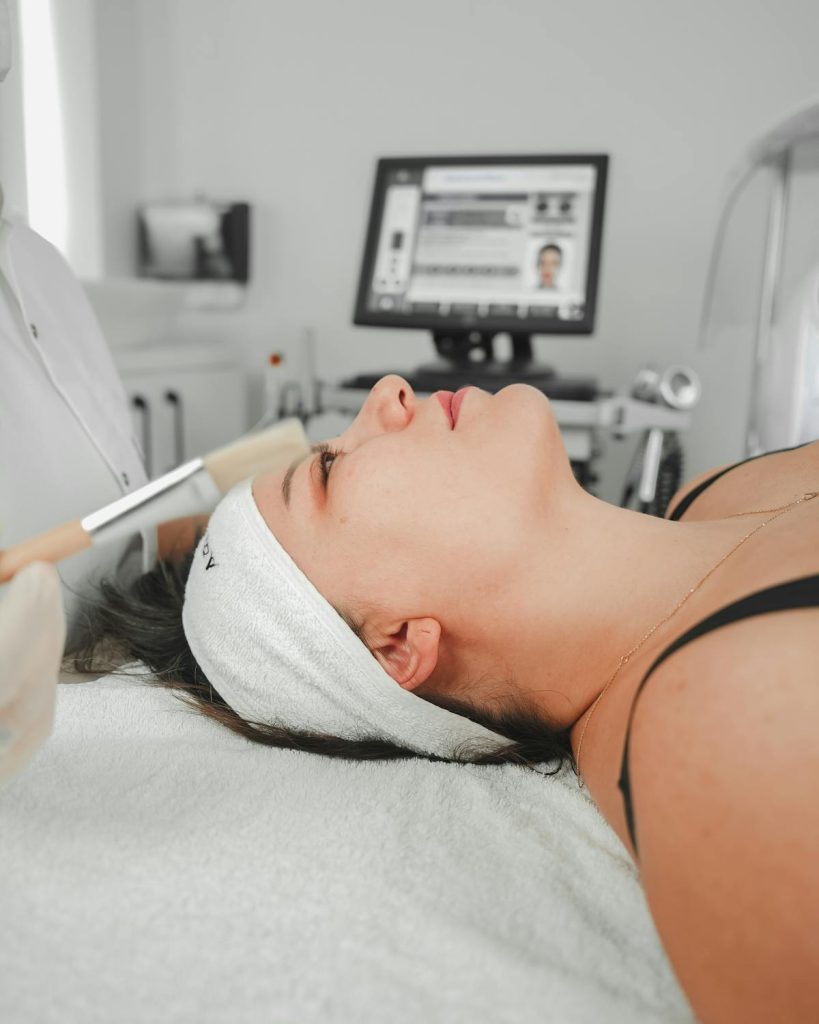
During: The solution is applied with a brush or gauze. Superficial peels feel like mild stinging; medium peels are more intense but tolerable. Your dermatologist watches carefully for the right endpoint — this is a critical safety judgment that requires medical training — then neutralizes the solution and applies a healing ointment. The entire appointment takes 30 to 60 minutes.
After: For superficial peels, apply moisturizer and SPF 30+ and expect mild peeling for a few days. For medium peels, keep the skin clean and moist, use the prescribed healing ointment, don’t pick at peeling skin, and use SPF 50+ religiously — new skin is extremely vulnerable to sun damage. For deep peels, your dermatologist provides intensive wound care instructions with scheduled follow-up visits.
Who Should — and Shouldn’t — Get a Chemical Peel
Chemical peels work for most skin types and tones, but patients with darker skin (Fitzpatrick types IV–VI) have a higher risk of post-inflammatory hyperpigmentation. This doesn’t mean peels are off the table — it means you need a dermatologist experienced with diverse skin types who will select appropriate peel depths, solutions, and post-care protocols. At Elect Dermatology, Dr. Hockley and Dr. Stahr regularly treat patients across all skin tones.
Chemical peels are not appropriate for patients with active skin infections, uncontrolled rosacea, recent isotretinoin (Accutane) use within the past 6 months, or a history of keloid scarring. Pregnant and breastfeeding patients should discuss options with their dermatologist before proceeding.
Why Your Choice of Provider Matters
Chemical peels are everywhere — med spas, aesthetician studios, even some hair salons. But a peel that penetrates into the dermis is a medical procedure that can cause infection, scarring, or permanent pigmentation changes if done incorrectly.
A board-certified dermatologist brings three things a med spa can’t: the medical training to select the right peel depth for your specific skin, the clinical judgment to monitor the peel endpoint in real time, and the ability to manage complications immediately if they arise. Research shows that chemical peels administered by qualified physicians have serious complication rates below 1%.
At Elect Dermatology, every chemical peel is personally performed and monitored by a physician — and during your consultation, your dermatologist also evaluates your overall skin health, catching early skin cancer or precancerous lesions that a med spa technician isn’t trained to identify.
Common Questions About Chemical Peels
Will a chemical peel work on my darker skin tone?
Yes. Chemical peels are effective for all skin tones, but the risk of post-inflammatory hyperpigmentation is higher in darker skin. The solution isn’t to avoid peels — it’s to work with a dermatologist who understands these risks, selects appropriate peel depths, and provides proper post-treatment care.
Can I combine a peel with Botox or fillers?
Yes, though timing matters. Your dermatologist will typically recommend spacing the peel and injectables 1 to 2 weeks apart to allow each treatment to heal properly.
How many peels do I need?
Superficial peels work best as a series of 4 to 6 treatments. Medium peels often deliver significant results in a single session. Deep peels are one-time procedures with lasting results.
How long do results last?
Superficial peel results last 1 to 2 months before maintenance is needed. Medium peel results last 6 to 12 months. Deep peel results can last years. Consistent sun protection and a good skincare routine extend all results significantly.
Is a chemical peel painful?
Superficial peels cause mild stinging that most patients describe as very tolerable. Medium peels are more uncomfortable but manageable. Deep peels are performed with numbing medication. Most patients say the temporary discomfort is well worth the results.
Schedule Your Chemical Peel Consultation in New Braunfels
Sun damage, acne scars, and uneven skin tone don’t have to be permanent. A professional chemical peel from a board-certified dermatologist in New Braunfels can produce results that no drugstore product can match — and at Elect Dermatology, every peel is performed by a physician, never a technician.
Whether you need a gentle superficial series to brighten your complexion or a medium peel to tackle stubborn acne scars, Dr. Hockley and Dr. Stahr will evaluate your skin, explain your options honestly, and design a treatment plan for your specific goals and budget — no pressure, no upselling.
New patients are welcome, and we’re currently accepting same-week appointments.
Call us today at (833) 353-2875 or request an appointment online. We’re conveniently located at 2154 Gabriels Pl, Ste 103, New Braunfels, TX 78130 — serving patients from across Comal County, including San Marcos, Seguin, Canyon Lake, Schertz, and the greater San Antonio area.
Schedule Your Dermatology Appointment
Our board certified dermatologists in New Braunfels are here to help. New patients are always welcome.