Botox for Forehead Lines in New Braunfels, TX: What to Expect
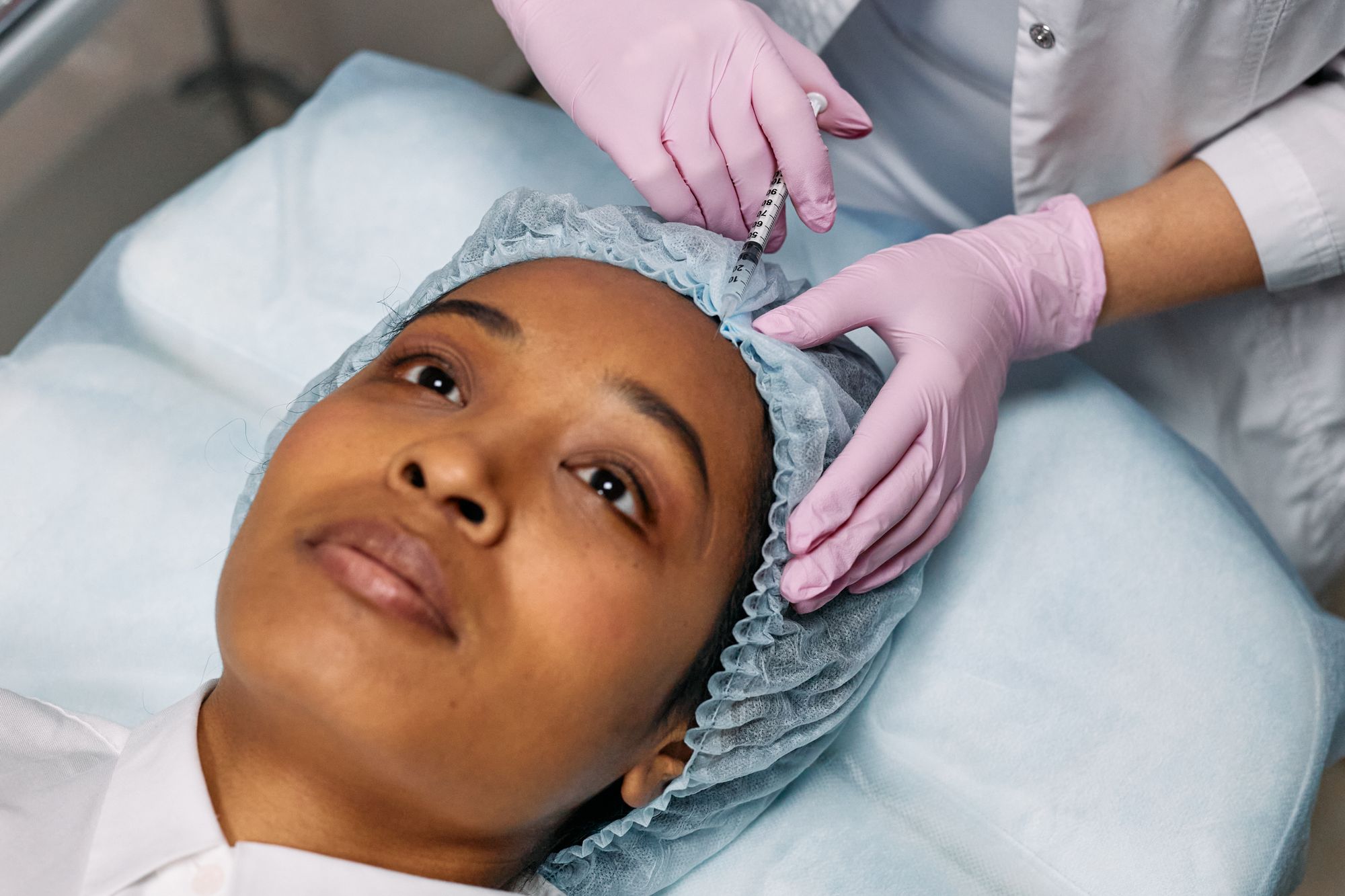
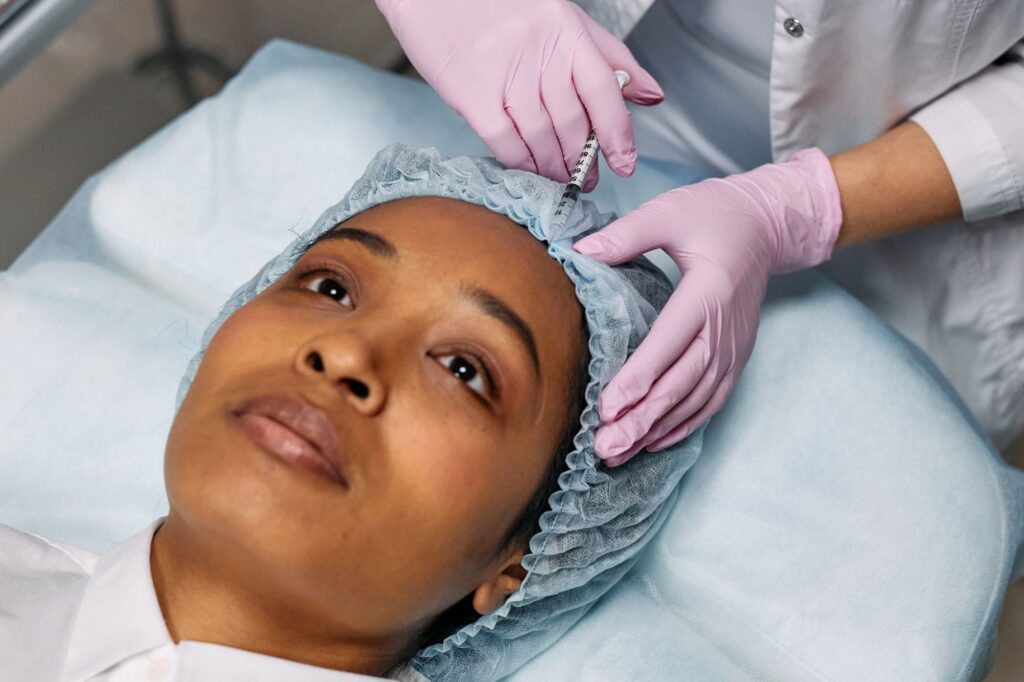
Botox for forehead lines in New Braunfels, TX is one of the most commonly performed cosmetic treatments at Elect Dermatology — and one of the most nuanced to do well. Forehead lines are often the first visible sign of facial aging that patients notice, and they’re directly caused by the frontalis muscle contracting thousands of times each day as you raise your eyebrows, look up, or express surprise. Over years of repetitive movement combined with progressive collagen loss, what were once dynamic lines (only visible with expression) become static creases (visible at rest). Botox temporarily relaxes the frontalis and allows the overlying skin to smooth out, often dramatically.
But forehead Botox done incorrectly produces one of the most recognizable cosmetic missteps in aesthetic medicine: a heavy, drooping brow that makes patients look tired or angry. Understanding why this happens — and why it doesn’t happen when treatment is performed correctly by an experienced physician — is as important as understanding what Botox can accomplish.
Why Forehead Lines Develop
The frontalis is a large, broad muscle spanning the full width of the forehead. Its primary function is elevating the brows. Every time you look surprised, raise your eyebrows in conversation, or squint upward in bright sunlight — which is often in Central Texas — the frontalis contracts. Over decades, this repetitive motion, combined with declining collagen and dermal thinning, creates horizontal lines that graduate from dynamic (expression-only) to static (permanent creases visible at rest).
Genetics, cumulative sun exposure, skin type, and facial expressiveness all influence when and how severely forehead lines develop. Patients who spend significant time outdoors — near Canyon Lake, the Comal River, or in other sun-intensive environments — tend to develop static forehead lines earlier than average.
The Critical Relationship Between Forehead Botox and Brow Position
This is the single most important concept in forehead Botox treatment, and the one most commonly mishandled by inexperienced injectors. Understanding it explains why the same treatment can produce dramatically different outcomes depending on who performs it.
- The frontalis is the only primary brow elevator. It is the single muscle responsible for lifting the brow upward.
- Over-treatment removes brow support. Relaxing the frontalis too completely eliminates the brow’s ability to maintain its natural position — the brow drops.
- Low baseline brow position dramatically increases risk. Patients who already compensate with high frontalis activity to hold their brows up are most vulnerable to brow ptosis from forehead Botox.
- The glabella must be treated in balance. The corrugator and procerus muscles between the brows are brow depressors. Treating only the forehead without also treating the glabella can produce an unnatural result.
- Some movement should always be preserved. The goal is smoothing, not complete frontalis paralysis.
Brow ptosis after forehead Botox is not an inevitable complication — it is an entirely predictable result of over-treatment or failure to assess baseline brow anatomy. At Elect Dermatology, every forehead Botox consultation begins with a physician evaluation of baseline brow position, frontalis activity level, and existing brow-lifting compensation patterns before any treatment plan is developed.
How Many Units of Botox for Forehead Lines?
Dosing for forehead Botox is individualized — not one-size-fits-all. The variables that determine appropriate dose include frontalis size and strength, severity of resting lines, baseline brow position, and the patient’s aesthetic goals. General clinical ranges:
- Women: 8–20 units for the forehead alone — often toward the lower end of this range for patients with low brows, heavy upper lids, or who are treating the forehead for the first time
- Men: 15–30 units, given typically larger and more powerful frontalis muscles
Forehead Botox is almost always performed alongside glabellar (frown line) treatment. Treating only the forehead without addressing the glabella can create a “Spock brow” or “Mephisto” effect — an unnatural lateral arch caused when medial frontalis activity is suppressed but lateral activity remains. Treating both areas together produces a natural, balanced result. At Elect Dermatology, Dr. Hockley and Dr. Stahr assess the full upper face before developing any treatment plan.
Side Effects and What to Watch For
Forehead Botox is well-tolerated and associated with a predictable, manageable side effect profile when performed correctly:
- Bruising: Mild bruising at injection sites is possible, typically resolving within 3–5 days. Minimize risk by avoiding NSAIDs, fish oil, vitamin E, and alcohol for one week before treatment.
- Mild headache: Some patients experience a mild headache the day of treatment, resolving within 24 hours.
- Temporary heaviness: A sensation of brow heaviness can occur in the first 1–2 weeks as the Botox takes full effect. This often resolves as the muscles adapt.
- Brow ptosis (if over-treated): Drooping of the brow resulting from excessive frontalis relaxation. Rare when performed by experienced physician injectors using appropriate dosing. Resolves as Botox wears off.
- “Spock brow”: Unnatural lateral brow arch from unbalanced treatment. Correctable with a small additional dose to the lateral frontalis.
What to Expect During Your Forehead Botox Appointment
Consultation and assessment: Dr. Hockley or Dr. Stahr evaluates baseline brow position, frontalis strength, current line severity (dynamic vs. static), and any facial asymmetries. The full upper face — forehead and glabella together — is assessed before a treatment plan is developed.
Preparation: Topical numbing cream is available but not required — forehead injections are brief and involve mild, momentary pinching. The needles used are very fine.
Injection: The procedure itself takes 5–10 minutes. A series of precise injections are placed across the forehead using a consistent, anatomically-guided pattern. No downtime — patients resume normal activities immediately. Avoid rubbing the treated area and strenuous exercise for 4 hours post-treatment.
When Do Results Appear and How Long Do They Last?
Botox results in the forehead begin appearing within 3–5 days and reach their full effect at 10–14 days. Patients should not evaluate their results at day 2 or 3 — the muscles are still partially active. The two-week mark is the appropriate time to assess and, if needed, request a small touch-up.
Forehead Botox typically lasts 3–4 months in most patients. Factors that influence duration include individual metabolism, frontalis muscle size and activity, and consistency of treatment over time. Long-term regular Botox patients often find that results last slightly longer as the muscle gradually responds to consistent treatment.
For patients seeking extended duration, Daxxify (daxibotulinumtoxinA-lanm) — a newer botulinum toxin formulation using a novel peptide excipient — demonstrated median duration of approximately 6 months in the SAKURA Phase 3 clinical trials, significantly longer than standard Botox. Ask Dr. Hockley or Dr. Stahr whether Daxxify may be appropriate for your treatment goals.
What Forehead Botox Cannot Fix
Botox is highly effective for dynamic lines — creases caused by muscle movement. For patients with deep, static forehead wrinkles visible at complete rest even without expression, Botox will produce improvement but typically not full resolution. These residual lines represent structural collagen damage in the dermis that muscle relaxation alone cannot reverse.
Complementary options for static forehead lines include microneedling (collagen remodeling over a series of treatments), medical-grade skincare (prescription tretinoin, growth factor serums), and chemical peels for surface texture. A small number of patients with isolated deep static lines may benefit from conservative dermal filler treatment, though this is approached cautiously given the vascular anatomy of the forehead.
Why Choose a Board-Certified Dermatologist for Forehead Botox
Patients in New Braunfels have many options for Botox — from dermatologist offices to medical spas to “Botox bars.” The distinctions matter significantly for forehead treatment specifically, where the consequences of incorrect technique are visible and can take months to fully resolve.
At Elect Dermatology, all Botox is performed personally by Dr. Hockley and Dr. Stahr — board-certified dermatologists with specialized training in facial anatomy and cosmetic injection technique. They assess brow position, evaluate the full upper face before treating any single area, identify patients who need modified dosing protocols, and can recognize and manage complications if they arise.
Forehead Botox FAQ
Q: Does Botox for forehead lines hurt?
Most patients describe the injections as brief, mild pinching. The needles used are very fine. Topical numbing cream is available on request but is not necessary for most patients.
Q: Will forehead Botox make me look frozen?
When properly dosed by an experienced physician, forehead Botox should soften lines without eliminating all expression. The goal is natural, reduced-wrinkle movement — not a motionless forehead. The “frozen” look results from over-treatment, not from Botox itself.
Q: How much does forehead Botox cost in New Braunfels?
Pricing is typically based on the number of units used. Contact Elect Dermatology for current pricing or to schedule a consultation.
Q: Can forehead Botox be combined with other treatments?
Yes — and it commonly is. Forehead Botox is routinely combined with glabellar and crow’s feet treatment in the same appointment. It can also be combined with microneedling or chemical peels for patients addressing both muscle-related and structural components of forehead aging.
Q: Who should not get forehead Botox?
Contraindications include pregnancy, breastfeeding, certain neuromuscular conditions (myasthenia gravis, Lambert-Eaton syndrome), and allergy to botulinum toxin. Patients with very low-set brows or significant upper lid hooding may require a modified treatment approach. A physician consultation will identify any contraindications or anatomy-based modifications needed.
Schedule Your Botox Consultation at Elect Dermatology in New Braunfels
Ready to soften forehead lines with Botox in New Braunfels? Dr. Hockley and Dr. Stahr at Elect Dermatology perform all Botox injections personally — with careful brow-position assessment to avoid heaviness or droop. If you’ve been hesitant because of the “frozen” or “overdone” look you’ve seen, a consultation will show you what conservative, physician-performed treatment actually looks like.
Call (833) 353-2875 or visit us at 2154 Gabriels Pl, Ste 103, New Braunfels, TX 78130 to schedule your consultation. Serving patients from New Braunfels, San Marcos, Seguin, and Canyon Lake. Book online here.
References
- American Academy of Dermatology. Botulinum Toxin Overview. aad.org
- Carruthers J, Carruthers A. Botulinum toxin type A: history and current cosmetic use in the upper face. Semin Cutan Med Surg. 2001;20(2):71–84. PubMed
- Raspaldo H, et al. Upper- and mid-face anti-aging treatment and prevention using onabotulinumtoxin A: the 2019 FACE consensus. J Cosmet Dermatol. 2020;19(2):316–328. PubMed
- Michaels BM, et al. Prospective randomized comparison of onabotulinumtoxinA (Botox) and abobotulinumtoxinA (Dysport) in the treatment of forehead, glabellar, and periorbital wrinkles. Aesthet Surg J. 2012. PubMed
- Green JB, et al. A large, open-label, phase 3 safety study of daxibotulinumtoxinA for injection in glabellar lines (SAKURA 3). Dermatol Surg. 2021. PubMed
Thinking about treatment? Our Botox and Jeuveau injections in New Braunfels page explains what we use, what it treats, and what to expect. Call (833) 353-2875 to book a consultation.
Schedule Your Dermatology Appointment
Our board certified dermatologists in New Braunfels are here to help. New patients are always welcome.