Vascular Laser Treatment in New Braunfels: The Dermatologist’s Solution for Spider Veins, Rosacea, and Persistent Facial Redness
If you’re searching for vascular laser treatment in New Braunfels, you’re likely dealing with visible blood vessels, persistent redness, or spider veins that no amount of concealer or skincare can hide. These vascular concerns are among the most common cosmetic complaints dermatologists see — and among the most satisfying to treat, because vascular lasers produce visible, meaningful results — often with noticeable improvement after just one to three sessions.
The American Academy of Dermatology
recognizes laser and light-based therapies as effective treatments for a range of vascular skin conditions, from facial spider veins and rosacea to cherry angiomas and port wine stains. These treatments work by selectively targeting hemoglobin — the red pigment in blood — with specific wavelengths of light, causing abnormal blood vessels to collapse and be reabsorbed by the body while leaving surrounding skin unharmed.
At Elect Dermatology, our board-certified dermatologists perform vascular laser treatments for patients across Comal County — from downtown New Braunfels and Gruene to Canyon Lake, San Marcos, Seguin, and the surrounding Hill Country — using advanced laser technology calibrated to your specific condition, skin type, and treatment goals.
What Vascular Lasers Treat: Common Conditions That Respond to Laser Therapy
Facial spider veins (telangiectasias): These are small, dilated blood vessels visible near the skin surface — thin red, blue, or purple lines typically appearing on the nose, cheeks, and chin. They develop from sun damage, aging, rosacea, hormonal changes, or genetic predisposition.
Vascular lasers target these vessels precisely, causing them to seal shut and gradually fade over the following weeks. Most patients see significant improvement after one to two treatments.
Rosacea and diffuse facial redness: Rosacea affects an estimated 16 million Americans according to the AAD, and its hallmark symptoms — persistent facial redness, visible blood vessels, and flushing — can be profoundly frustrating for patients who’ve tried topical treatments with limited success. Vascular laser therapy reduces the underlying network of dilated blood vessels responsible for rosacea redness, producing improvement that topical medications alone often cannot achieve. A review published in PMC confirmed that laser and light-based therapies are among the most effective treatments for the erythematotelangiectatic (redness and visible vessel) subtype of rosacea.
Cherry angiomas: These are small, bright red or purple dome-shaped growths caused by an overgrowth of blood vessels in the skin. They’re extremely common — most adults develop at least a few by middle age — and while they’re completely benign, many patients want them removed for cosmetic reasons. Vascular lasers can eliminate cherry angiomas in a single treatment, typically in seconds per lesion.
Leg spider veins: Small spider veins on the legs — the fine red, blue, or purple web-like networks that often appear on the thighs, calves, and ankles — respond well to vascular laser treatment. While larger varicose veins require different interventions, surface-level spider veins can be effectively treated with laser therapy or sclerotherapy depending on their size and location.
Port wine stains and other vascular birthmarks: These flat, reddish-purple birthmarks are present from birth and caused by malformed blood vessels in the skin. Vascular lasers remain the gold standard treatment for port wine stains, with the AAD noting that laser treatment can significantly lighten these birthmarks, especially when started early.
Bothered by visible veins, redness, or rosacea that won’t respond to topical treatments? Our board-certified dermatologists specialize in vascular laser treatment in New Braunfels and can evaluate your condition and recommend the most effective approach. Call (833) 353-2875 or request an appointment online .
How Vascular Laser Treatment Works — The Science Behind Selective Photothermolysis
Vascular lasers work through a principle called selective photothermolysis — a precisely controlled process where specific wavelengths of light are absorbed by hemoglobin (the oxygen-carrying molecule in red blood cells) while passing harmlessly through surrounding skin structures. When the laser energy is absorbed by hemoglobin, it converts to heat, which damages the walls of the targeted blood vessel. The vessel collapses, seals shut, and is gradually reabsorbed by the body’s natural clearing mechanisms over the following weeks.
Different vascular conditions respond best to different wavelengths and laser types. Pulsed dye lasers (PDL) emit light at 585 to 595 nanometers — a wavelength strongly absorbed by hemoglobin — making them particularly effective for superficial vascular lesions like facial telangiectasias, rosacea, and port wine stains. Nd:YAG lasers operate at 1064 nanometers, which penetrates deeper into the skin and is better suited for larger or deeper vessels, including leg spider veins and blue-toned vessels. KTP lasers emit green light at 532 nanometers, a wavelength strongly absorbed by hemoglobin and well suited to superficial facial vessels, broken capillaries, and cherry angiomas. At Elect Dermatology, vascular treatments are performed with the VariLite laser, which pairs a 532 nanometer wavelength for fine surface vessels with a 940 nanometer wavelength for deeper, larger ones.
The key to safe, effective vascular laser treatment is selecting the right device, wavelength, and energy settings for each patient’s specific condition and skin type. This is where a board-certified dermatologist’s expertise makes a critical difference — the same laser at the wrong settings can produce suboptimal results or, worse, cause burns and scarring.
What to Expect During Vascular Laser Treatment in New Braunfels
Before treatment: Your dermatologist will evaluate your vascular concerns, examine the affected areas, and determine which laser or light-based device will produce the best results for your specific condition. You’ll be advised to avoid sun exposure, self-tanners, and blood-thinning medications (aspirin, ibuprofen, fish oil) for one to two weeks before treatment, as these can increase the risk of bruising. If you’re being treated for rosacea, your dermatologist may optimize your topical regimen in the weeks leading up to laser treatment.
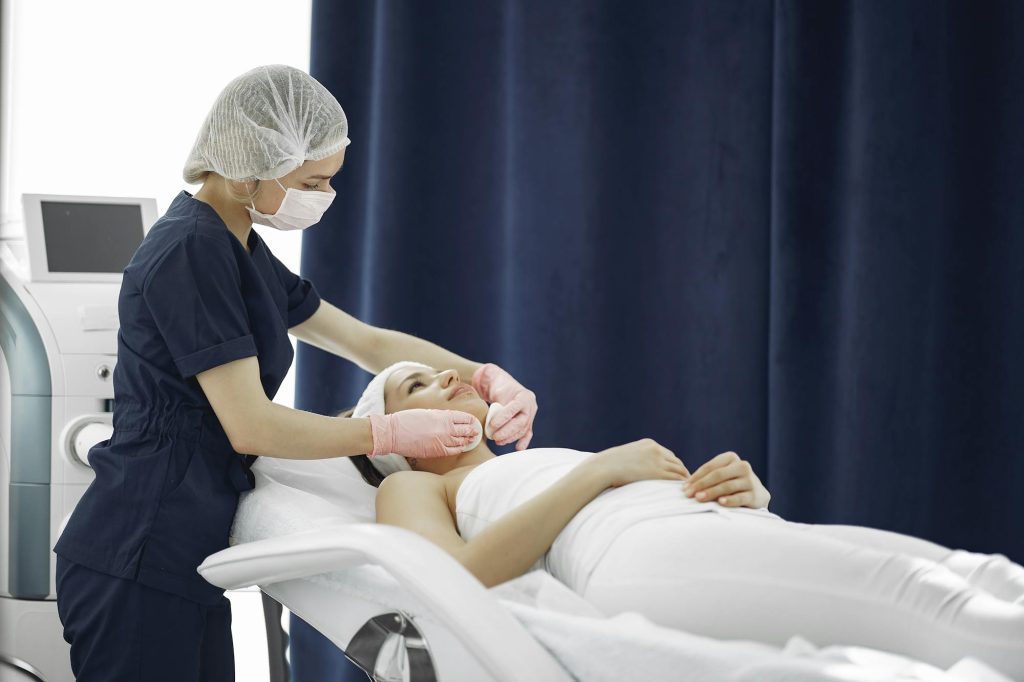
During treatment: Most vascular laser treatments take 15 to 30 minutes depending on the size of the treatment area. Protective eye shields are placed over your eyes. The laser handpiece is applied to the skin, delivering pulses of light to the targeted vessels. Most patients describe the sensation as a quick snap or warm pinch — uncomfortable but very tolerable. Topical numbing is available for sensitive areas but is not required for most patients. A cooling device built into the laser tip protects the skin surface during treatment.
Immediately after: The treated area will appear red and mildly swollen, similar to a mild sunburn. Some vascular lasers leave a temporary purplish discoloration (purpura) in the treated area, which fades within 7 to 10 days. With the VariLite, purpura is uncommon — most patients have only redness and mild swelling that settles within 24 to 48 hours.
Recovery: There is minimal downtime with vascular laser treatments. Most patients return to normal activities immediately, though you may want to avoid strenuous exercise for 24 hours. Apply sunscreen (SPF 50+) diligently during the healing period — UV exposure can trigger new vascular changes and compromise your results. Avoid hot showers, saunas, and alcohol for 24 to 48 hours, as these can increase facial flushing.
How Many Vascular Laser Sessions Are Needed?
The number of sessions depends on the condition being treated and its severity. Facial spider veins often improve dramatically after one to two sessions. Rosacea redness typically requires two to four sessions spaced four to six weeks apart for optimal improvement. Cherry angiomas are usually eliminated in a single treatment. Leg spider veins may require two to four sessions depending on density and size. Port wine stains require multiple sessions — often six or more — spaced several weeks apart.
Your dermatologist will set realistic expectations during your consultation based on the specific vascular condition, its severity, and your skin type. Most patients see visible improvement after the first treatment, with progressive improvement after each subsequent session as the body continues to clear the treated vessels.
Maintenance treatments may be needed over time, particularly for rosacea, as the underlying condition can cause new blood vessels to develop. Many rosacea patients benefit from annual or semi-annual maintenance sessions to keep redness under control — combined with ongoing topical management, trigger avoidance, and daily sun protection.
Why a Dermatologist Should Perform Your Vascular Laser Treatment
Vascular laser devices are powerful tools that require precise calibration for safe and effective use. The parameters that produce excellent results on a fair-skinned patient with superficial telangiectasias are very different from the settings needed for a patient with deeper vessels, darker skin, or active rosacea. Using aggressive settings on the wrong skin type can cause burns, scarring, or post-inflammatory hyperpigmentation.
A board-certified dermatologist brings critical advantages to vascular laser treatment: the medical training to accurately diagnose the underlying vascular condition (not all redness is rosacea, and not all visible vessels require the same approach), expertise in selecting the optimal device and settings for your skin type and condition, the ability to recognize contraindications that would make laser treatment unsafe, and the clinical judgment to adjust treatment parameters in real time based on your skin’s response.
At Elect Dermatology, Dr. Hockley and Dr. Stahr evaluate every patient’s vascular concerns thoroughly before recommending laser treatment — because the right diagnosis and the right device settings are the foundation of safe, effective results.
Frequently Asked Questions About Vascular Laser Treatment in New Braunfels
Is vascular laser treatment painful? Most patients tolerate vascular laser treatment well without numbing. The sensation is typically described as a quick rubber-band snap accompanied by a brief warm sensation. Treatments are short — most sessions take 15 to 30 minutes — and discomfort is minimal. Topical anesthetic is available for patients who prefer it.
How long until I see results? Some improvement is visible immediately as treated vessels collapse. However, the full result develops over two to six weeks as the body reabsorbs the treated vessels. Rosacea redness may continue to improve for several months after a treatment series as the overall vascular network in the skin is progressively reduced.
Does insurance cover vascular laser treatment? Vascular laser treatment for cosmetic concerns like spider veins and cherry angiomas is typically not covered by insurance. However, treatment for medical conditions like rosacea or symptomatic vascular lesions may be partially covered depending on your plan. Our staff at Elect Dermatology will verify your specific coverage during your consultation.
Can vascular laser treatment be combined with other procedures? Yes. Vascular laser treatment pairs well with chemical peels for patients with combined vascular and pigmentation concerns, and with Botox or dermal fillers for comprehensive facial rejuvenation. Your dermatologist will sequence treatments appropriately.
Are results permanent? Treated vessels are permanently destroyed — they will not return. However, new vessels can develop over time due to ongoing sun exposure, aging, hormonal changes, or the progression of underlying conditions like rosacea.
Maintenance treatments and consistent sun protection help preserve your results long-term.
Get Vascular Laser Treatment in New Braunfels from a Board-Certified Dermatologist
Visible blood vessels, persistent redness, and spider veins don’t have to be something you live with — or something you try to hide with makeup every day. The right vascular laser treatment in New Braunfels from a board-certified dermatologist can produce visible, lasting improvement in vascular skin concerns that topical products simply cannot address.
At Elect Dermatology, Dr. Hockley and Dr. Stahr perform vascular laser treatments with physician-grade devices and customized settings tailored to your specific condition, skin type, and aesthetic goals. We’ll evaluate your vascular concerns, explain your treatment options, and deliver results you can see.
New patients are welcome, and we’re currently accepting same-week appointments.
Call us today at (833) 353-2875 or request an appointment online. We’re conveniently located at 2154 Gabriels Pl, Ste 103, New Braunfels, TX 78130 — serving patients from across Comal County, including San Marcos, Seguin, Canyon Lake, Schertz, and the greater San Antonio area.
Schedule Your Dermatology Appointment
Our board certified dermatologists in New Braunfels are here to help. New patients are always welcome.