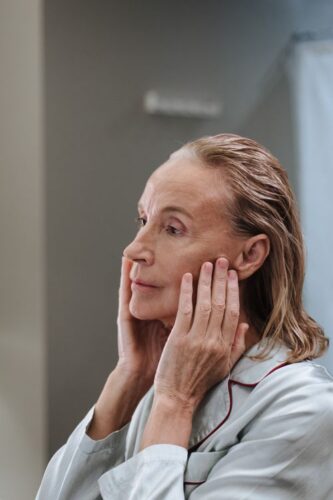
Preventive Botox New Braunfels TX — sometimes called “baby Botox” — is an increasingly popular approach to anti-aging that focuses on slowing wrinkle development before lines become permanently etched into the skin. Rather than waiting until static wrinkles are established, some patients choose conservative neurotoxin treatment in their 20s or 30s to maintain smoother skin over time. At Elect Dermatology, we guide patients through this decision with honest, individualized guidance — no pressure, no one-size-fits-all recommendations.
First, a Note on Which Product We Use
“Botox” has become the everyday word for this entire category of treatment, the way people say “Kleenex” for tissue — so that is the word most patients use, and the word we use throughout this article. In our office, though, the neurotoxin we primarily inject is Jeuveau® (prabotulinumtoxinA), made by Evolus. Jeuveau and Botox® Cosmetic are both purified botulinum toxin type A products in the same family, they work by the same mechanism, and they are injected the same way, with comparable onset and duration.
We mention this up front because we would rather you know before your appointment than be surprised in the chair. If you have a specific reason to prefer one product over another, tell us at your consultation — that is a completely reasonable conversation to have, and we will talk it through with you.
One point of accuracy worth stating plainly: Jeuveau is FDA-approved for the temporary improvement of moderate to severe glabellar (frown) lines in adults. Treating other areas — forehead lines and crow’s feet among them — is a common, well-established, physician-directed use of botulinum toxin, but it falls outside Jeuveau’s specific FDA labeling. Any practice that tells you otherwise is being loose with the language. For more on how we approach neurotoxin treatment generally, see our Botox and Jeuveau injections page.
What Is Preventive Botox?
Preventive Botox uses low doses of botulinum toxin to gently reduce the repetitive muscle contractions responsible for dynamic wrinkles — before those wrinkles become permanent. The underlying mechanism: every time you frown, squint, or raise your eyebrows, the overlying skin creases. Repeated thousands of times over years, these dynamic creases gradually degrade the skin’s collagen and elastic fibers, eventually becoming visible even at rest (static wrinkles). By reducing — not eliminating — the repetitive muscle activity that drives this process, preventive neurotoxin treatment may slow the transition from dynamic to static wrinkles.
Think of it as analogous to daily sunscreen use: intervening before cumulative damage accumulates, rather than waiting to address established harm.
Dynamic vs. Static Wrinkles: The Key Distinction
Dynamic wrinkles appear only with facial movement — crow’s feet when squinting, forehead lines when raising eyebrows, glabellar lines (“11s”) when frowning. At rest, they disappear. Dynamic wrinkles are normal at any adult age and are not, by themselves, an indication for treatment.
Static wrinkles remain visible even when the face is completely relaxed. They represent cumulative structural changes in the dermis — collagen degradation, reduced elastin, and thinning of the skin. Static wrinkles typically become visible in the 40s and 50s, though genetics, sun exposure, and facial animation habits significantly influence when they appear.
Some observational research suggests that patients who receive consistent neurotoxin treatment over many years develop less severe static wrinkles over time compared to untreated individuals. However, the evidence base for preventive treatment is still primarily observational, and individual results vary considerably. The Carruthers et al. work on botulinum toxin in facial rejuvenation established the foundation for understanding how muscle relaxation impacts long-term wrinkle progression.
What Age Should You Start Preventive Botox?
There is no universally correct age. The right time depends on multiple factors specific to you:
Appearance of dynamic wrinkles: If you notice persistent lines forming when you make expressions — especially lines that take longer to fade after the expression relaxes — this is the most clinically meaningful signal. For most people, this begins somewhere between the mid-20s and mid-30s.
Family history: If close relatives developed significant static wrinkles relatively early, genetic susceptibility is worth factoring in.
Sun exposure history: Cumulative UV exposure is the strongest environmental driver of premature skin aging. If your skin has had significant sun exposure — and in Central Texas that is most of us — you may develop expression lines earlier than peers with similar animation habits.
Facial animation habits: Patients who smile broadly, squint frequently (especially outdoors without sunglasses), or have particularly active facial expressions naturally develop expression lines earlier.
Personal values: This matters significantly. Some people strongly prefer to prevent all visible wrinkles; others value the natural progression of facial aging and prefer not to intervene. Both approaches are entirely valid.
As a general framework: starting neurotoxin treatment at 18–22 with no visible dynamic wrinkles is rarely indicated and may reflect social pressure more than medical need. Most patients who benefit from a preventive approach are in their late 20s to late 30s, when dynamic lines are consistently visible and starting to linger after the expression relaxes.
Baby Botox: The Preventive Approach
“Baby Botox” describes a technique using lower doses distributed across multiple sites, achieving a subtle reduction in muscle activity while preserving natural expression and movement. The goal is prevention and softening — not complete immobilization of expression muscles.
Benefits of this approach:
- Natural appearance — you continue to look like yourself, just more relaxed
- Lower doses mean lower per-treatment cost, though the same maintenance schedule applies
- Gradual introduction allows you to assess your comfort with the results before committing to higher doses
- Reduces the “frozen” appearance concern that some patients associate with more aggressive dosing
It is worth noting that dosing varies considerably by patient anatomy, the areas being treated, and injector technique. Your dermatologist will assess your specific facial muscle activity rather than applying a standardized protocol.
Preventive Botox: Honest Considerations
Arguments in favor: Prevention may be more cost-effective over time than correction of deep static wrinkles. Conservative dosing typically produces natural-looking results that preserve expressiveness. Patients who start gradually tend to have clearer expectations and are more comfortable with the process.
Arguments against: Neurotoxin treatment requires maintenance every 3–4 months indefinitely. The cumulative cost over decades is meaningful. Some patients value natural aging and find the idea of preventing expression lines philosophically inconsistent with their values. The long-term data on starting preventive treatment in one’s 20s specifically — and continuing for 40+ years — do not yet exist, though botulinum toxin has a 30+ year safety record in cosmetic use.
Who is not a candidate: Pregnancy and breastfeeding are contraindications to botulinum toxin treatment of any brand. Patients with certain neuromuscular disorders (myasthenia gravis, Lambert-Eaton syndrome) should not receive botulinum toxin. Known hypersensitivity to any botulinum toxin preparation, or to any component of the specific formulation being used, is an absolute contraindication, as is an active infection at the planned injection site. We review your full medical history before treating.
Preventive Botox vs. Corrective Botox
The underlying medication and injection technique are essentially the same — the distinction is in the dose, the goal, and the timing. Corrective treatment uses higher doses to address established static wrinkles, often requiring several treatment cycles before the wrinkles soften. Preventive treatment uses lower doses targeting dynamic lines before they become static, with the aim of slowing rather than reversing aging changes.
Both approaches produce results that last approximately 3–4 months. The AAD’s guidance on botulinum toxin injections provides a helpful patient-facing overview of what to expect.
Combining Preventive Botox with a Complete Anti-Aging Strategy
Neurotoxin treatment addresses one specific mechanism of aging — repetitive muscle-driven creasing. A comprehensive preventive approach also includes:
Daily broad-spectrum SPF 30+: The single most evidence-supported anti-aging intervention. UV damage directly degrades collagen, disrupts pigmentation, and accelerates the structural changes that drive visible aging.
Retinoids: Prescription tretinoin or OTC retinol promotes collagen production, improves skin texture, and reduces early photoaging changes. Most dermatologists recommend optimizing sunscreen and a retinoid before considering injectables.
Hyaluronic acid fillers: As volume loss accompanies aging (fat compartment atrophy, bone resorption), subtle dermal fillers can restore the structural support that a neurotoxin cannot address.
Professional treatments: Chemical peels and radiofrequency microneedling address skin texture, pigmentation, and collagen quality — complementing the muscular effect of neurotoxins.
Frequently Asked Questions: Baby Botox in New Braunfels
Q: Do you use Botox or Jeuveau?
We primarily use Jeuveau® (prabotulinumtoxinA). It is a purified botulinum toxin type A in the same family as Botox® Cosmetic, works by the same mechanism, and has a comparable onset and duration. We use the word “Botox” on our site because that is the term nearly everyone searches for, but we want you to know what you are actually receiving. If you have a preference, raise it at your consultation.
Q: Is Jeuveau as effective as Botox?
In head-to-head clinical trials for glabellar (frown) lines, prabotulinumtoxinA performed comparably to onabotulinumtoxinA. Most patients cannot tell the difference in result or duration. Injector skill and dosing matter considerably more than which of the two products is in the syringe.
Q: Will preventive Botox make me look frozen?
No — baby Botox specifically uses conservative doses to preserve natural expression. Looking frozen reflects over-treatment, not the treatment itself.
Q: Does Botox actually prevent wrinkles, or just delay them?
Current evidence is primarily observational. Reducing the muscle activity that drives wrinkle formation logically slows wrinkle progression, and some studies support this. Whether it truly “prevents” static wrinkles or simply delays them is still being studied.
Q: What if I start and then stop?
Your skin will gradually return to its pre-treatment state. Botulinum toxin does not accelerate aging if you discontinue treatment.
Q: Is preventive Botox right for me?
The best way to find out is a consultation. A board-certified dermatologist can evaluate your dynamic wrinkles, discuss your goals, and give you an honest assessment of whether a preventive approach makes sense for your skin.
References
- Carruthers A, Carruthers J. Botulinum toxin type A: history and current cosmetic use in the upper face. Semin Cutan Med Surg. 2001;20(2):71–84. PubMed
- Small R. Botulinum toxin injection for facial wrinkles. Am Fam Physician. 2014;90(3):168–175. PubMed
- American Academy of Dermatology. Botulinum toxin therapy: overview. AAD.org
- Hexsel D, Brum C, do Prado DZ, et al. Field effect of two commercial preparations of botulinum toxin type A: a prospective, double-blind, randomized clinical trial. J Am Acad Dermatol. 2012;67(2):226–232. PubMed
- U.S. Food and Drug Administration. JEUVEAU (prabotulinumtoxinA-xvfs) for injection — prescribing information. BLA 761085. FDA Drugs@FDA
Considering preventive Botox or baby Botox in New Braunfels? The board-certified dermatologists at Elect Dermatology can evaluate your facial movement, discuss your anti-aging goals honestly, and recommend a conservative approach if it’s right for you — without pressure to do more than you need. Schedule a consultation today. Call (833) 353-2875 or visit us at 2154 Gabriels Pl, Ste 103, New Braunfels, TX 78130. Serving New Braunfels, San Marcos, Seguin, and the surrounding Hill Country.
Reviewed by Dr. Stahr
Schedule Your Dermatology Appointment
Our board certified dermatologists in New Braunfels are here to help. New patients are always welcome.