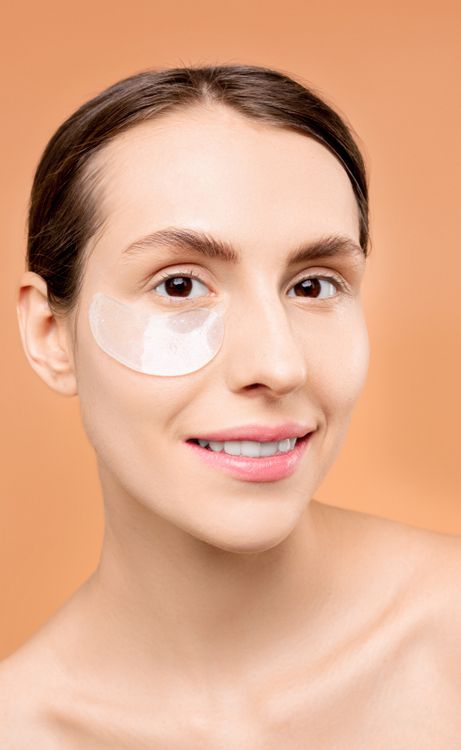
Tear trough filler in New Braunfels, TX is one of the most requested — and most technically demanding — cosmetic procedures we perform at Elect Dermatology. Patients seeking under-eye filler in New Braunfels, San Marcos, and Seguin often choose tear trough treatment to correct tired-looking eyes without surgery, anesthesia, or weeks of downtime. When placed correctly by a physician with detailed periorbital anatomy knowledge, strategically placed hyaluronic acid filler can produce one of the most dramatic facial rejuvenation results available without going under the knife.
The tear trough is the hollow groove running from the inner corner of the eye toward the upper cheek. When this area loses volume with age — or simply lacks it from genetics — it creates a shadow that makes patients look perpetually exhausted, even when fully rested. Understanding what causes this hollowing, who is and isn’t a good candidate, and what the procedure actually involves will help you make an informed decision about whether tear trough filler is right for you.
Why Tear Trough Filler Is One of the Most Technically Complex Injection Areas
Not every injector should be performing tear trough filler, and patients should understand why. The periorbital region presents a unique set of anatomical challenges that distinguish it from most other areas commonly treated with filler:
- Exceptionally thin skin — lower eyelid skin averages just 0.5 mm thick, compared to roughly 2 mm on the cheek. Filler placed at the wrong depth becomes immediately visible.
- Complex muscle and fascial layers — the orbicularis oculi muscle, orbital septum, and periosteum of the orbital rim all occupy an extremely compressed space.
- Proximity to major blood vessels — branches of the angular artery and infraorbital vessels run directly adjacent to the optimal injection planes.
- Limited margin for error — small overcorrections, incorrect filler product selection, or suboptimal depth cause complications that are visible and sometimes difficult to correct.
These factors make tear trough one of the highest-risk injection areas on the face. Complications range from the cosmetic (bruising, Tyndall effect) to the rare but serious (vascular occlusion). At Elect Dermatology, all tear trough filler is performed personally by Dr. Hockley and Dr. Stahr — board-certified dermatologists with extensive training in periorbital anatomy and cosmetic injection technique. This is not a procedure delegated to aestheticians or mid-level providers in our practice.
What Causes Tear Trough Hollowing?
The hollow under-eye appearance that patients want corrected has several distinct causes, and identifying the primary driver matters for treatment planning:
- Volume loss: Mid-face and periorbital fat compartments thin progressively with age, creating an abrupt eyelid-to-cheek transition that wasn’t present in youth.
- Orbital bone resorption: The orbital rim itself retracts slightly with age, making the eyelid-cheek junction structurally more prominent regardless of soft tissue changes.
- Skin laxity: Lower eyelid skin loses elasticity over time, becoming less able to mask the underlying volume deficit.
- Genetics: Some patients have pronounced tear troughs in their 20s or early 30s — an inherited structural feature with no age-related component at all.
Under-Eye Hollows vs. Eye Bags: A Critical Distinction
This is the most important distinction in tear trough evaluation, and it’s one that patients cannot reliably make themselves. The two conditions look superficially similar but respond to completely different treatments — and confusing them leads to poor outcomes.
True tear trough hollowing is a volume deficit. There is a concave shadow below the eye caused by loss of tissue. Filler directly addresses this by restoring the missing volume. Results are excellent in appropriate candidates.
Orbital fat prolapse (“eye bags”) is the opposite: a convex bulge caused by orbital fat pushing forward through a weakened orbital septum. Filler does not address this — in some cases it can actually worsen the appearance by adding more volume to an already protruding area. Patients with true eye bags may be candidates for lower blepharoplasty (surgical eyelid correction), not filler.
Some patients have both conditions simultaneously, which requires a nuanced treatment plan. This is precisely why a thorough consultation with a physician — not a quick treatment appointment — is essential before any under-eye filler is placed.
Who Is a Good Candidate for Tear Trough Filler?
The ideal candidate for tear trough filler has true volume-related hollowing, adequate lower eyelid skin quality, and realistic expectations about what filler can and cannot accomplish. Specifically, good candidates typically:
- Have a concave hollow or shadow under the eyes, not a convex bulge or puffiness
- Have reasonably good lower eyelid skin quality without significant excess or laxity
- Do not have malar edema (fluid swelling in the cheek region) — filler in the presence of malar edema can worsen chronic swelling
- Do not have festoons (bunched lower eyelid muscle/skin) — filler can exacerbate this condition
- Are not taking anticoagulants or medications that significantly increase bruising risk
- Have had a full anatomy assessment to rule out orbital fat prolapse as the primary concern
Patients with malar edema, festoons, significant skin laxity, or true orbital fat prolapse may not be good candidates for tear trough filler. Attempting to treat these conditions with filler can lead to worse results than leaving them untreated. During your consultation, Dr. Hockley or Dr. Stahr will assess your anatomy thoroughly to determine whether filler is appropriate or whether a different approach would serve you better.
Which Filler Is Best for the Tear Trough?
Filler selection for the tear trough is not interchangeable. Softer, lower-viscosity fillers are required in this area because they spread smoothly under very thin skin without creating visible lumps or a bluish discoloration (Tyndall effect). Common choices used at Elect Dermatology include:
- Belotero Balance — the only FDA-approved hyaluronic acid filler with labeling that specifically notes periorbital use. Its unique cohesive polydensified matrix integrates smoothly into delicate periorbital tissue.
- Restylane-L — a thin-viscosity HA filler with a long track record in periorbital treatment.
- Juvederm Volbella — designed for delicate areas; lower lifting capacity than denser fillers but appropriate for superficial tear trough work.
All three are hyaluronic acid products, meaning they are fully reversible with hyaluronidase — an important safety advantage in a high-risk injection area. Thicker, denser fillers used in cheeks or nasolabial folds (such as Revanesse Versa for lips and nasolabial folds) are not appropriate for the tear trough.
What to Expect During the Tear Trough Filler Procedure
A complete tear trough filler appointment at Elect Dermatology follows a structured process designed to optimize results and minimize risk:
Consultation: A physician evaluates your anatomy, assesses for orbital fat prolapse and malar edema, documents baseline asymmetry, reviews contraindications, and confirms that filler is the right approach for your specific presentation.
Preparation: Topical numbing cream is applied and allowed to take full effect over 20–30 minutes. All HA fillers also contain lidocaine, providing additional anesthesia during injection.
Injection: Filler is placed deep — at or just above the periosteum of the orbital rim — using either a needle or a blunt cannula. Small aliquots are built up gradually. Conservative volumes (typically 0.5–1.0 mL per side) are used. Overcorrection is not appropriate in this area.
Duration: Including numbing time, the appointment typically takes 30–45 minutes.
Tear Trough Filler Recovery and Timeline
Recovery expectations for tear trough filler differ from other injection sites due to the periorbital area’s unique physiology:
- Swelling: Expected for 2–5 days, peaking at 24–48 hours. Sleep elevated, apply ice gently (not directly on skin), and avoid heat for the first 48 hours.
- Bruising: Common given the vascular density around the orbital rim. Typically resolves in 7–10 days. To minimize bruising risk, avoid NSAIDs, fish oil, vitamin E supplements, and alcohol for one week before your appointment.
- Delayed lymphatic swelling: Some patients experience a second wave of mild puffiness at 1–2 weeks as lymphatic drainage is temporarily disrupted. This resolves on its own.
- Final results: Assess at 4 weeks — not immediately. The combination of initial swelling and gradual HA integration means results continue evolving for several weeks.
- Duration: Hyaluronic acid filler lasts approximately 9–18 months in the tear trough — somewhat variable depending on anatomy, metabolism, and product used.
Risks and Complications of Under-Eye Filler
Tear trough filler is associated with a specific complication profile that patients should understand before proceeding:
- Tyndall effect: Filler placed too superficially under thin lower eyelid skin creates a bluish-gray discoloration visible at rest. Treatment is hyaluronidase to dissolve the misplaced filler.
- Persistent swelling: The periorbital area’s lymphatic drainage is easily disrupted. Most cases resolve with gentle massage and cold compresses; persistent cases may require hyaluronidase.
- Asymmetry: Often reflects differential swelling in the first 2 weeks rather than a true placement asymmetry. Reassess at 4 weeks before considering correction.
- Vascular occlusion: Rare but serious. Risk is minimized by physician injectors, deep periosteal placement technique, conservative volumes, and slow injection. Emergency hyaluronidase is stocked at Elect Dermatology.
The reversibility of hyaluronic acid fillers — dissolved by hyaluronidase within 24–48 hours — is a meaningful safety advantage in the periorbital area and one reason HA fillers are the standard of care for this indication.
Tear Trough Filler FAQ
Q: How do I know if I’m a good candidate?
You’re likely a good candidate if you have true hollowing (a concave shadow, not puffiness or bags) with adequate skin quality and no malar edema or festoons. A consultation with a physician is required to determine this accurately.
Q: How long does tear trough filler last?
Typically 12–18 months, though this varies by product and individual metabolism. Patients who respond well often choose touch-up treatment before the filler fully dissolves.
Q: Is the procedure painful?
Topical numbing cream plus the lidocaine contained in the filler itself make this procedure well-tolerated for the vast majority of patients. Some pressure and mild discomfort is normal; significant pain is not.
Q: Can tear trough filler be dissolved if I don’t like the results?
Yes. Hyaluronidase dissolves hyaluronic acid filler within 24–48 hours, returning the area to its pre-treatment state. This reversibility is one reason HA fillers are preferred over permanent options in the periorbital area.
Q: What’s the difference between tear trough filler and blepharoplasty?
Tear trough filler corrects volume-related hollowing — it adds structure without surgery or downtime. Lower blepharoplasty surgically addresses excess skin, structural fat prolapse (eye bags), and muscle laxity. Some patients benefit from one; some need both. Dr. Hockley and Dr. Stahr will help you identify the right approach during your consultation.
Q: How much does tear trough filler cost in New Braunfels?
Pricing depends on the product used and volume required. Contact Elect Dermatology or schedule a consultation for a personalized quote.
Schedule Your Tear Trough Filler Consultation at Elect Dermatology
Ready to look more rested without surgery? Tear trough filler at Elect Dermatology in New Braunfels is performed exclusively by board-certified dermatologists using conservative, safety-focused technique. We take the time to properly evaluate your anatomy, identify whether filler is the right approach for you, and deliver results that look natural — not overfilled or obvious.
Schedule a consultation with Dr. Hockley or Dr. Stahr to find out if under-eye filler is right for your goals. Call (833) 353-2875 or visit us at 2154 Gabriels Pl, Ste 103, New Braunfels, TX 78130. We also serve patients from San Marcos, Seguin, Canyon Lake, and surrounding communities. Appointments are available — book yours today.
References
- American Academy of Dermatology. Soft Tissue Fillers: Safety Overview. aad.org
- Kikkawa DO, et al. Relations of the superficial musculoaponeurotic system to the orbit and characterization of the orbitomalar ligament. Ophthalmic Plast Reconstr Surg. 1996. PubMed
- DeLorenzi C. Complications of injectable fillers, part 2: vascular complications. Aesthet Surg J. 2014;34(4):584–600. PubMed
- Liew S, et al. Lower eyelid dark circles (tear trough and lid-cheek junction): a step-by-step treatment approach. Aesthet Surg J. 2024. PubMed
- Allemann IB, Baumann L. Hyaluronic acid gel (Juvederm) preparations in the treatment of facial wrinkles and folds. Clin Interv Aging. 2008;3(4):629–634. PubMed
Considering filler? See our dermal fillers in New Braunfels page for how we use Versa for lips and smile lines and Juvéderm Voluma for cheeks, or call (833) 353-2875 to book a consultation.
Schedule Your Dermatology Appointment
Our board certified dermatologists in New Braunfels are here to help. New patients are always welcome.