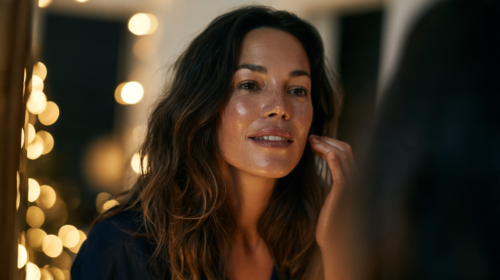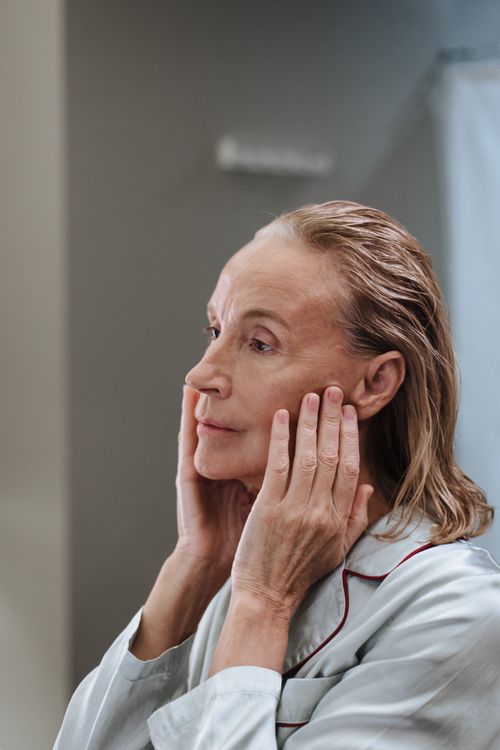
An effective anti-aging skincare routine isn’t built around a single miracle product — it’s a layered approach that targets multiple pathways of skin aging simultaneously. At Elect Dermatology in New Braunfels, Dr. Hockley and Dr. Stahr create personalized anti-aging plans grounded in dermatological evidence rather than marketing claims. Here is the framework they use.
The Cornerstone: Daily Broad-Spectrum Sunscreen
UV radiation is the primary external driver of photoaging — responsible for collagen degradation, elastin damage, hyperpigmentation, and the cumulative cellular damage that accelerates visible skin aging. A prospective study by Hughes et al. (Ann Intern Med, 2013) demonstrated that participants randomized to daily sunscreen use showed significantly less skin aging over 4.5 years compared to those using sunscreen discretionarily — a direct, controlled demonstration that sunscreen prevents photoaging, not just burns.
Apply broad-spectrum SPF 50+ every morning, including cloudy days (UVA penetrates cloud cover and glass). In Central Texas, meaningful UV exposure occurs year-round. Mineral sunscreens containing zinc oxide are generally well-tolerated by mature or sensitive skin. Reapply after swimming or sweating. This single habit prevents the accelerated photoaging that is most difficult to reverse later.
Retinoids: The Gold Standard for Photoaging
Retinoids are the most extensively studied topical ingredient class for photoaging, acne, and hyperpigmentation. Prescription tretinoin (0.025%–0.1%) is active retinoic acid and binds directly to nuclear receptors, accelerating epidermal cell turnover and directly stimulating fibroblast collagen synthesis. A landmark study by Weiss et al. (JAMA, 1988) provided the first controlled evidence that tretinoin reverses photoaging — a finding that has been replicated across decades. OTC retinol requires conversion to retinoic acid (two enzymatic steps) and is approximately 20 times less potent at equivalent concentrations, but remains clinically effective at 0.5–1% with consistent use.
Start at a low concentration applied 2–3 nights per week, increasing frequency gradually over 4–8 weeks as tolerance develops. Expect mild initial dryness or peeling — this is a normal adaptation phase, not a sign the product is too strong. Meaningful improvement in fine lines and texture typically requires 8–12 weeks of consistent use.
Vitamin C: Antioxidant Protection and Brightening
L-ascorbic acid (vitamin C) serves multiple anti-aging functions: it scavenges reactive oxygen species generated by UV exposure, directly participates in collagen synthesis as an enzyme cofactor, and inhibits melanin production — making it effective for hyperpigmentation prevention. Telang (Indian Dermatol Online J, 2013) provides a thorough review of its dermatological mechanisms and clinical evidence.
For maximal bioavailability, L-ascorbic acid requires a pH at or below approximately 3.5 — a range that can cause tingling on sensitive skin but is required for effective skin penetration. Concentrations of 10–20% are most commonly used in clinical formulations. Apply in the morning before sunscreen — the antioxidant activity complements UV protection. L-ascorbic acid oxidizes rapidly in air and light; look for dark glass or airless pump packaging, and replace when the serum turns orange or brown.
Hydration and Barrier Support
Aging skin produces less natural lipid and hyaluronic acid, reducing the skin’s ability to retain moisture and maintain barrier integrity. A ceramide-rich moisturizer repairs the stratum corneum’s lipid matrix, reducing transepidermal water loss and making skin more resilient to irritation from actives. Hyaluronic acid serums attract moisture to the skin surface. Peptides support collagen synthesis signaling pathways. Niacinamide reduces pore appearance and supports ceramide production.
Apply hydrating serum after your retinoid or vitamin C has absorbed, then seal with moisturizer. For patients starting tretinoin, a “sandwich” technique — moisturizer before and after tretinoin — can reduce irritation during the adaptation phase.
Don’t Neglect the Neck and Chest
The neck and chest receive significant UV exposure and have fewer sebaceous glands than the face, making them prone to earlier and more visible photoaging — yet most patients apply anti-aging products exclusively to their face. Extend your entire routine (vitamin C, retinoid, SPF) to the neck and chest. The improvement in these areas over 12 weeks of consistent treatment is often dramatic.
Professional Anti-Aging Treatments
Topical skincare addresses surface aging; professional treatments address structural changes that topicals cannot reach. Botox relaxes the muscles generating dynamic expression lines — crow’s feet, forehead creases, glabellar lines — with results appearing at 2 weeks and lasting 3–4 months. Dermal fillers (Revanesse Versa for lips and nasolabial folds, Juvederm Voluma for cheeks) restore volume loss that creates hollowed or deflated facial appearance.
Superficial chemical peels at 4–6 week intervals progressively improve texture, pigmentation, and skin quality by exfoliating the outermost epidermal layers and stimulating mild collagen remodeling. RF microneedling with Vivace creates controlled microinjury that triggers robust collagen remodeling — with results continuing to develop over 3 months. These treatments work synergistically with consistent topical skincare.
Building Your Routine: Morning and Evening
Morning: Gentle cleanser → L-ascorbic acid vitamin C serum (allow to dry 2–3 min) → Hydrating serum → Moisturizer → SPF 50+ sunscreen
Evening: Gentle cleanser → Tretinoin or retinol (on dry skin, 20–30 min post-wash) → Hydrating serum → Eye cream → Moisturizer
Weekly: Gentle exfoliation 1–2x/week (after retinoid tolerance is established). Hydrating mask 1–2x/week if skin feels tight.
Realistic Timeline
Skin texture improvements are often noticeable within 2–4 weeks of beginning a retinoid. Fine line reduction typically becomes apparent at 4–8 weeks. Meaningful wrinkle reduction and photoaging reversal require 12 weeks or longer of consistent use. Professional treatments accelerate visible improvement but are most durable when maintained alongside a solid topical routine.
References
- Hughes MC, et al. Sunscreen and prevention of skin aging: a randomized trial. Ann Intern Med. 2013;158(11):781–790. PubMed
- Weiss JS, et al. Topical tretinoin improves photoaged skin. JAMA. 1988;259(4):527–532. PubMed
- Telang PS. Vitamin C in dermatology. Indian Dermatol Online J. 2013;4(2):143–146. PubMed
- American Academy of Dermatology. 11 ways to reduce premature skin aging. AAD.org
Ready to build an anti-aging skincare routine that actually works? The board-certified dermatologists at Elect Dermatology in New Braunfels create personalized plans — combining evidence-based topicals, prescription options, and professional treatments — tailored to your skin’s specific concerns and timeline. Call (833) 353-2875 to schedule your consultation at 2154 Gabriels Pl, Ste 103, New Braunfels, TX 78130. We treat patients across the New Braunfels and Hill Country area.
Reviewed by Dr. Hockley
Related reading: if the texture you want to improve is stretch marks rather than facial aging, see microneedling for stretch marks in New Braunfels.
Schedule Your Dermatology Appointment
Our board certified dermatologists in New Braunfels are here to help. New patients are always welcome.