What Is Keratosis Pilaris?
Keratosis pilaris is one of the most common skin conditions dermatologists see. According to the American Academy of Dermatology, it appears as small, rough-feeling bumps that many people compare to goosebumps, sandpaper, chicken skin, or strawberry skin. The bumps most often show up on the backs of the upper arms and the fronts of the thighs, but they can also appear on the cheeks, buttocks, and forearms. Each bump usually sits over a hair follicle, and some are surrounded by a little pink or red halo.
KP is completely benign. It is not contagious, it does not scar on its own, and it is not a sign of any internal illness. For most people the biggest issue is cosmetic — the texture and, sometimes, the redness. Others notice mild dryness or occasional itch. What KP is not is acne, folliculitis, or an allergic rash, even though it can be mistaken for all three, which is one reason a quick professional diagnosis is worthwhile.
What Causes Those Bumps?
The bumps come from keratin, a protective protein your skin makes naturally. In keratosis pilaris, excess keratin builds up and plugs the opening of the hair follicle, forming a small, hard bump. As the Mayo Clinic notes, exactly why this keratin accumulates is not fully understood — but the tendency is largely inherited. If a parent has “chicken skin,” their children often do too.
Several things make KP more noticeable rather than cause it outright. Dry skin tops the list: the drier the skin, the more prominent the bumps feel and look, which is why KP frequently worsens in winter and low humidity and eases in warmer, more humid months. There is also a well-established link with eczema (atopic dermatitis) and with generally dry skin types; people who have one are more likely to have the other. KP is most common in children and adolescents and, encouragingly, tends to fade with age — many people find it improves noticeably by around age 30.
Why It Can Feel Worse in Central Texas
Our climate cuts both ways. The humid stretches of a New Braunfels summer can actually calm KP, because moisture in the air helps keep the skin barrier hydrated. But two local realities push in the other direction: months of air-conditioned indoor air, which is very drying, and the long, hot showers many people take after time outdoors. Both strip the skin of moisture and make the bumps rougher and more visible. Understanding this seasonal rhythm helps set realistic expectations — KP tends to ebb and flow rather than vanish for good.
How Dermatologists Treat Keratosis Pilaris
There is no cure for keratosis pilaris, but there is a lot you can do to improve how it looks and feels. Treatment works along two tracks at once: hydrating the skin so bumps are less prominent, and exfoliating the excess keratin so follicles unplug. The American Academy of Dermatology recommends building a gentle, consistent routine around moisturizers and keratolytic (keratin-dissolving) ingredients rather than aggressive scrubbing.
Moisturize — the foundation
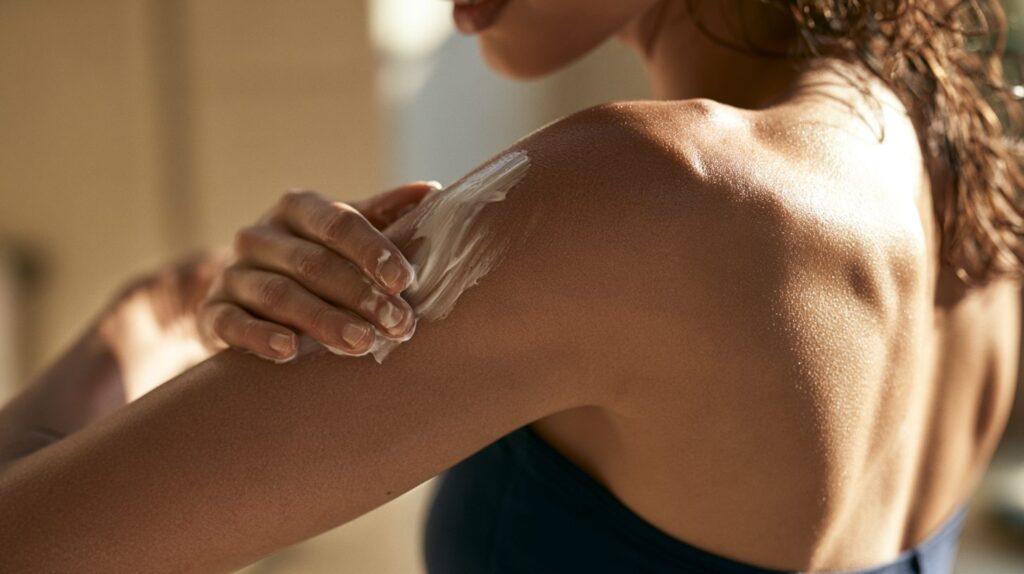
Applying a thick, fragrance-free moisturizer within a few minutes of getting out of the shower, while the skin is still damp, traps water in the skin and softens the bumps. Doing this two to three times a day is more effective than any single “miracle” product. Look for ingredients such as ceramides, glycerin, or petrolatum for barrier repair.
Exfoliate with keratolytics — the workhorses
The ingredients with the best track record for KP are chemical exfoliants, not physical scrubs. A 2024 review of topical keratolytics found that alpha hydroxy acids, beta hydroxy acids, and urea all show benefit for smoothing keratosis pilaris. In practice, the most useful are:
- Urea (often 10–20%) — both hydrates and dissolves excess keratin, making it one of the most valuable single ingredients for KP.
- Lactic acid and glycolic acid (alpha hydroxy acids) — loosen the bonds between dead cells so follicles unplug. Ammonium lactate lotion is a common, well-tolerated option.
- Salicylic acid (a beta hydroxy acid) — oil-soluble, so it penetrates into the follicle to clear the plug.
- Topical retinoids (such as tretinoin or adapalene) — normalize how skin cells shed; useful for stubborn cases, though they can be drying and are used under guidance.
The trade-off with any of these is potential irritation, especially early on. Starting a few times a week and building up, always paired with moisturizer, keeps skin comfortable. This is exactly where a dermatologist earns their keep — matching the strength and combination of ingredients to your skin so you get results without a red, stinging mess.
In-office options for texture and redness
For patients who want faster or more dramatic smoothing, a professional chemical peel using lactic, glycolic, or salicylic acid can accelerate exfoliation beyond what home care achieves. For the persistent redness that some people find more bothersome than the bumps themselves — a variant called keratosis pilaris rubra — a vascular laser can reduce the background flush. These are optional, cosmetic add-ons; the daily home routine remains the backbone of good control.
Treatment at a Glance
| Goal | What helps |
|---|---|
| Everyday hydration | Fragrance-free moisturizer with ceramides/urea, applied to damp skin 2–3x daily |
| Smoothing the bumps | Urea 10–20%, lactic/glycolic acid, or salicylic acid lotions |
| Stubborn or widespread KP | Prescription-strength keratolytics or a topical retinoid, guided by a dermatologist |
| Faster texture improvement | In-office medium-depth chemical peel |
| Persistent redness (KP rubra) | Vascular laser to reduce background flush |
| Flare prevention | Short lukewarm showers, gentle cleanser, humidifier in dry months |
Tired of Rough, Bumpy Arms?
The board-certified dermatologists at Elect Dermatology in New Braunfels can confirm your diagnosis and build a keratosis pilaris routine matched to your skin — from over-the-counter urea creams to prescription keratolytics and in-office peels.
📞 (833) 353-2875 | 2154 Gabriels Pl, Ste 103, New Braunfels, TX 78130
Serving New Braunfels, San Marcos, Seguin, and Canyon Lake.
What NOT to Do
The single most common mistake is scrubbing harder. Loofahs, stiff brushes, and grainy physical scrubs feel productive but irritate and inflame the follicles, which can make KP redder and rougher — and, if you pick at the bumps, can lead to marks or, rarely, scarring. A few other habits worth dropping: long, hot showers (they strip moisture), harsh or heavily fragranced soaps, and skipping moisturizer because the skin “isn’t dry today.” Gentleness and consistency beat intensity every time with keratosis pilaris.
When to See a Dermatologist
You do not have to treat KP at all if it does not bother you. But it is worth a visit if the bumps itch, look inflamed, or are cosmetically distressing; if you are not sure whether what you have is actually keratosis pilaris versus acne, folliculitis, or eczema; or if drugstore moisturizers and exfoliants have not helped after a couple of months of honest effort. A dermatologist can confirm the diagnosis quickly — usually just by looking — and open the door to prescription-strength options that are not available over the counter. If you have been putting it off, our guide to your first dermatology visit explains exactly what to expect.
Smoother Skin Starts With a Simple Visit
Elect Dermatology is accepting new patients in New Braunfels. Dr. Hockley and Dr. Stahr will confirm your diagnosis, rule out look-alike conditions, and set you up with a realistic plan for smoother skin.
📞 (833) 353-2875 | 2154 Gabriels Pl, Ste 103, New Braunfels, TX 78130
Serving New Braunfels, San Marcos, Seguin, and Canyon Lake.
Frequently Asked Questions
No — there is no permanent cure, because the tendency is largely genetic. But with consistent moisturizing and keratolytic exfoliation, the bumps can be substantially smoothed, and many people find KP fades on its own with age, often by around 30.
There is no single “best,” but creams containing urea, lactic acid, glycolic acid, or salicylic acid have the strongest track record. Urea is especially useful because it both hydrates and exfoliates. A dermatologist can match the strength to your skin so you get results without irritation.
Not at all. KP is caused by keratin plugging the hair follicles, a tendency you inherit. Scrubbing harder does not help and often makes it worse.
Dry skin makes the bumps more prominent, and cold air, low humidity, and indoor heating all dry the skin out. KP commonly improves in humid summer months and flares when the air is dry.
Physical scrubs and loofahs tend to irritate KP rather than clear it. Chemical exfoliants (urea, lactic, glycolic, or salicylic acid) are far more effective and gentler on the follicles.
Call (833) 353-2875 or request an appointment online. Dr. Hockley or Dr. Stahr will confirm the diagnosis and build a treatment routine — including prescription options if needed — tailored to your skin.
- American Academy of Dermatology. Keratosis pilaris: Overview. aad.org
- American Academy of Dermatology. Keratosis pilaris: Diagnosis and treatment. aad.org
- Mayo Clinic. Keratosis pilaris: Symptoms and causes. mayoclinic.org
- Cleveland Clinic. Keratosis pilaris: Causes, symptoms & treatment. clevelandclinic.org
- Topical keratolytics (AHAs/BHAs/urea) in treating keratosis pilaris: a review of the literature. PMC, 2024. ncbi.nlm.nih.gov
Schedule Your Dermatology Appointment
Our board certified dermatologists in New Braunfels are here to help. New patients are always welcome.