
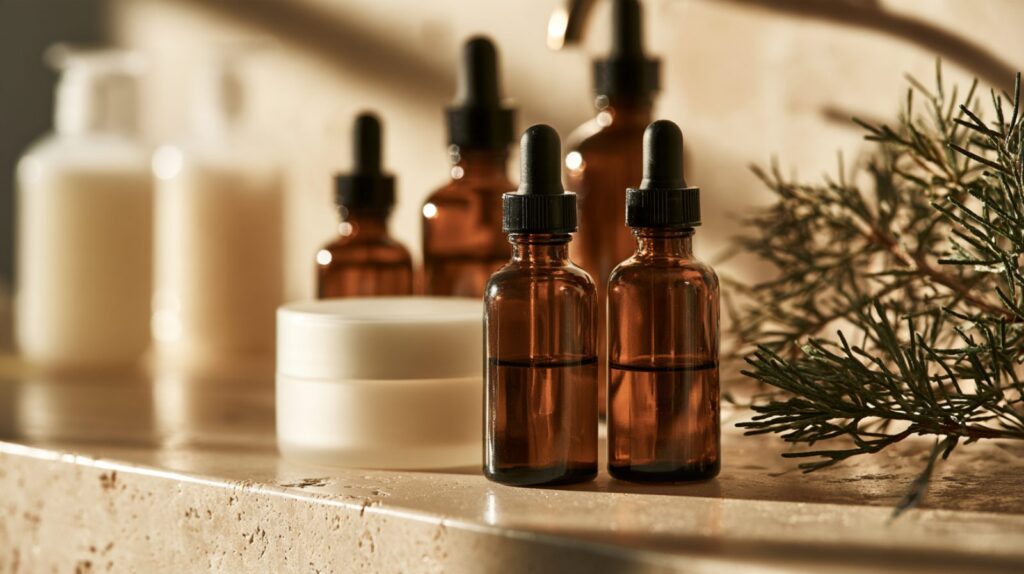
Medical-grade skincare is one of the most frequently misunderstood categories in dermatology. Patients spend billions on products labeled “clinical,” “professional-grade,” or “physician-recommended” every year — but the term medical-grade has no regulatory definition. The FDA does not regulate or certify skincare products as “medical-grade.” What the term actually signals is something more nuanced: a combination of higher active ingredient concentrations, formulation quality, clinical evidence requirements, and the involvement of a licensed professional in product selection. Whether that translates to meaningfully better results depends on which products you are comparing and what your skin goals are.
What “Medical-Grade” Actually Means — and Doesn’t Mean
Because the FDA does not define or regulate the term “medical-grade,” it is ultimately a marketing category, not a regulatory one. Products sold through physician offices or medical spas are not held to a separate FDA standard than products sold at a pharmacy. What distinguishes many of these products in practice is not FDA certification but:
- Higher concentrations of active ingredients — subject to efficacy and tolerability testing by the manufacturer
- Formulation quality and stability — more expensive to achieve, but not automatically present in every “medical-grade” product
- Clinical evidence requirements — some brands require published clinical data before making efficacy claims; others do not
- Physician oversight in selection — a dermatologist evaluates your skin type, conditions, and sensitivities before recommending products
That last point is often where the real value lies: not in the product itself, but in the personalized selection process.
Retinoids: Where the Prescription vs. OTC Difference Is Most Clinically Significant
The most evidence-supported distinction between prescription and OTC skincare involves retinoids. Over-the-counter retinol products typically contain retinol concentrations ranging from 0.025% to approximately 1% — with 1% representing the high end of what is available without a prescription. Retinol must be converted to retinoic acid through two enzymatic steps before it can bind to skin cell receptors; each step reduces potency. A study by Kafi et al. (Arch Dermatol, 2007) demonstrated that 0.4% retinol applied over 24 weeks produced statistically significant improvement in fine lines and photoaging, confirming OTC retinol has real efficacy at adequate concentrations.
Prescription tretinoin (0.025%–0.1%) bypasses the conversion pathway entirely — it is already in active retinoic acid form and binds directly to nuclear receptors. Research by Kang et al. (J Invest Dermatol, 1995) and others has documented tretinoin’s direct stimulation of collagen synthesis and inhibition of matrix metalloproteinases, effects not replicated by retinol at comparable concentrations within comparable timeframes. Prescription tretinoin works faster and more potently for acne, photoaging, melasma, and hyperpigmentation.
Bottom line on retinoids: For mild photoaging or texture maintenance, a well-formulated 0.5–1% OTC retinol is a legitimate option. For moderate-to-severe photoaging, acne, or melasma, prescription tretinoin delivers clinically superior results.
Vitamin C: Where Formulation Quality Matters Enormously
Vitamin C (L-ascorbic acid) is among the most evidence-backed topical antioxidants. Telang (Indian Dermatol Online J, 2013) summarizes its role in collagen synthesis, photoprotection, and hyperpigmentation reduction. However, L-ascorbic acid is highly unstable: it oxidizes rapidly when exposed to air, light, and water, and becomes inactive (turns orange/brown) in degraded formulations. It is also most effective at a pH below approximately 3.5 — a range that is more irritating but required for optimal skin penetration.
Many drugstore vitamin C serums use oxidized or insufficiently concentrated L-ascorbic acid, or substitute more stable but less potent vitamin C derivatives (ascorbyl glucoside, magnesium ascorbyl phosphate). Physician-dispensed vitamin C formulations typically use stabilized, higher-concentration L-ascorbic acid with optimized pH and packaging designed to prevent degradation. Here, formulation quality makes a measurable real-world difference — though a well-formulated drugstore vitamin C can outperform a poorly formulated “professional” product.
Sunscreen: Where Drugstore Is Often Just as Good
Broad-spectrum SPF 50+ sunscreen is the highest-evidence intervention in anti-aging and skin cancer prevention. For daily UV protection, the FDA-regulated SPF and broad-spectrum designation matter far more than whether a sunscreen is labeled “medical-grade.” Drugstore sunscreens with SPF 50+ and UVA/UVB protection are clinically comparable to prescription alternatives for most patients. The exception: patients with melasma benefit from sunscreens containing iron oxide (blocks visible light that drives melasma) — available in both medical and retail channels.
Moisturizers and Barrier Repair: Formulation Over Label
Ceramide-based moisturizers, hyaluronic acid serums, and niacinamide-containing products are available at excellent quality across both drugstore and physician-dispensed product lines. The American Academy of Dermatology endorses fragrance-free, ceramide-rich moisturizers — with no requirement that they come from a medical channel. For barrier repair and basic hydration, category label matters less than ingredient list.
The Real Value of a Physician-Dispensed Skincare Consultation
The most meaningful aspect of a medical skincare consultation is not which products are available — it is having a board-certified dermatologist evaluate your actual skin. The same active ingredient can benefit one patient and worsen another depending on skin type, Fitzpatrick type, existing conditions, and medication interactions. A dermatologist identifies: whether your hyperpigmentation is melasma, PIH, or solar lentigines (each treated differently); whether your “anti-aging routine” is causing barrier disruption; whether you need prescription-only interventions (tretinoin, hydroquinone, azelaic acid) that no OTC product can replicate; and whether your current routine is wasting money on redundant products.
Some drugstore products are excellent. Some physician-dispensed products are overpriced. The goal is matching the right ingredients — at the right concentrations, in stable formulations — to your specific skin. That evaluation is where the value of a dermatologist-guided skincare consultation lies.
References
- Kafi R, et al. Improvement of naturally aged skin with vitamin A (retinol). Arch Dermatol. 2007;143(5):606–612. PubMed
- Kang S, et al. Application of retinol to human skin in vivo induces epidermal hyperplasia and cellular retinoid binding proteins characteristic of retinoic acid but without measurable retinoic acid levels or irritation. J Invest Dermatol. 1995;105(4):549–556. PubMed
- Telang PS. Vitamin C in dermatology. Indian Dermatol Online J. 2013;4(2):143–146. PubMed
- American Academy of Dermatology. How to pick the right moisturizer for your skin. AAD.org
- Draelos ZD. The science behind skin care: moisturizers. J Cosmet Dermatol. 2018;17(2):138–144. PubMed
Not sure whether your current skincare routine is delivering real results — or which products your skin actually needs? The board-certified dermatologists at Elect Dermatology in New Braunfels provide personalized skincare consultations to evaluate your skin, identify what’s working, and prescribe or recommend treatments with proven clinical efficacy. Call (833) 353-2875 to schedule at 2154 Gabriels Pl, Ste 103, New Braunfels, TX 78130. Clearer, healthier skin starts with the right plan for your skin specifically.
Reviewed by Dr. Hockley
Schedule Your Dermatology Appointment
Our board certified dermatologists in New Braunfels are here to help. New patients are always welcome.