Acne Scar Treatment in New Braunfels: Why Your Scars Haven’t Faded and What a Dermatologist Can Actually Do About Them
If you’re searching for acne scar treatment in New Braunfels, you’ve probably already tried everything the drugstore has to offer — vitamin C serums, retinol creams, exfoliating acids, scar patches, and products that promise to “erase” scars in weeks. And if you’re reading this, those products probably haven’t delivered the results you were hoping for. That’s not because you’re doing something wrong — it’s because acne scars involve structural damage to the dermis that topical products simply cannot repair.
The American Academy of Dermatology notes that acne scars form when inflammatory acne damages the deeper layers of skin, and that effective treatment requires procedures that reach the dermis — the layer where collagen provides structural support. A 2019 review in the Journal of Clinical and Aesthetic Dermatology confirmed that acne scarring affects up to 95% of patients with a history of acne vulgaris to some degree, making it one of the most common cosmetic concerns dermatologists treat.
At Elect Dermatology, our board-certified dermatologists treat acne scars for patients across Comal County — from downtown New Braunfels and Gruene to Canyon Lake, San Marcos, Seguin, and the surrounding Hill Country — using a combination of advanced procedures tailored to your specific scar types, skin tone, and treatment goals.
Understanding Acne Scars: Why They Form and Why They Won’t Fade on Their Own
Acne scars are not the same as post-inflammatory hyperpigmentation (PIH) — the flat, dark or reddish marks that remain after a pimple heals. PIH is a discoloration issue that typically fades over months with proper skincare and sun protection. True acne scars involve actual changes to the skin’s structure — either too little collagen was produced during healing (creating depressions) or too much collagen was produced (creating raised scars).
The reason acne scars persist is that the inflammatory process during severe or cystic acne destroys collagen in the dermis, and the body’s repair process doesn’t always replace it correctly. Once the healing is complete, the structural damage is essentially permanent without intervention — no amount of waiting, moisturizing, or exfoliating will rebuild the collagen framework that was lost.
This is why acne scar treatment in New Braunfels requires a dermatologist who understands both the types of scarring you have and the specific procedures that address each type. There is no single treatment that works for all acne scars — effective treatment requires accurate diagnosis and often a combination of approaches.
The Three Types of Atrophic Acne Scars Your New Braunfels Dermatologist Will Identify
The vast majority of acne scars are atrophic — meaning they’re depressed below the surrounding skin surface due to collagen loss. Your dermatologist will identify which types you have because each responds differently to treatment.
Ice pick scars are narrow, deep, V-shaped depressions that extend into the dermis. They look like the skin has been punctured with a sharp instrument. Ice pick scars are the most challenging to treat because of their depth and narrow shape — they often require targeted procedures like TCA CROSS (trichloroacetic acid chemical reconstruction of skin scars) or punch excision rather than broad-surface treatments alone.
Boxcar scars are broader depressions with well-defined, vertical edges — imagine pressing a small box into the skin. They can be shallow or deep, and they respond well to a range of treatments including microneedling, RF microneedling, fractional laser resurfacing, and subcision. Shallow boxcar scars are among the most treatable acne scars.
Rolling scars create a wave-like undulation in the skin surface. They’re caused by fibrous bands that tether the skin to deeper structures, pulling the surface downward. Rolling scars often require subcision — a procedure that releases these tethering bands — combined with collagen-stimulating treatments to achieve optimal improvement.
Acne Scar Treatment in New Braunfels: What Dermatologists Actually Use
Effective acne scar treatment almost always involves multiple procedures and often multiple sessions. Your dermatologist will build a treatment plan based on your specific scar types, skin type, downtime tolerance, and budget.
RF microneedling is one of the most effective treatments for acne scarring currently available. It combines the collagen-stimulating effects of microneedling with radiofrequency energy delivered directly into the dermis, producing significant improvement in scar depth and texture. A 2022 systematic review confirmed that RF microneedling produces statistically significant improvement in acne scar severity with a favorable safety profile across multiple skin types — including darker skin tones that may not be good candidates for some laser treatments.
Radiofrequency microneedling (Vivace) combines microneedling with radiofrequency energy to enhance the collagen-remodeling process triggered by the needles. The radiofrequency microneedling treatment at Elect Dermatology delivers heat energy directly into the micro-channels created by the needles, stimulating deeper collagen remodeling and enhancing results compared to microneedling alone.
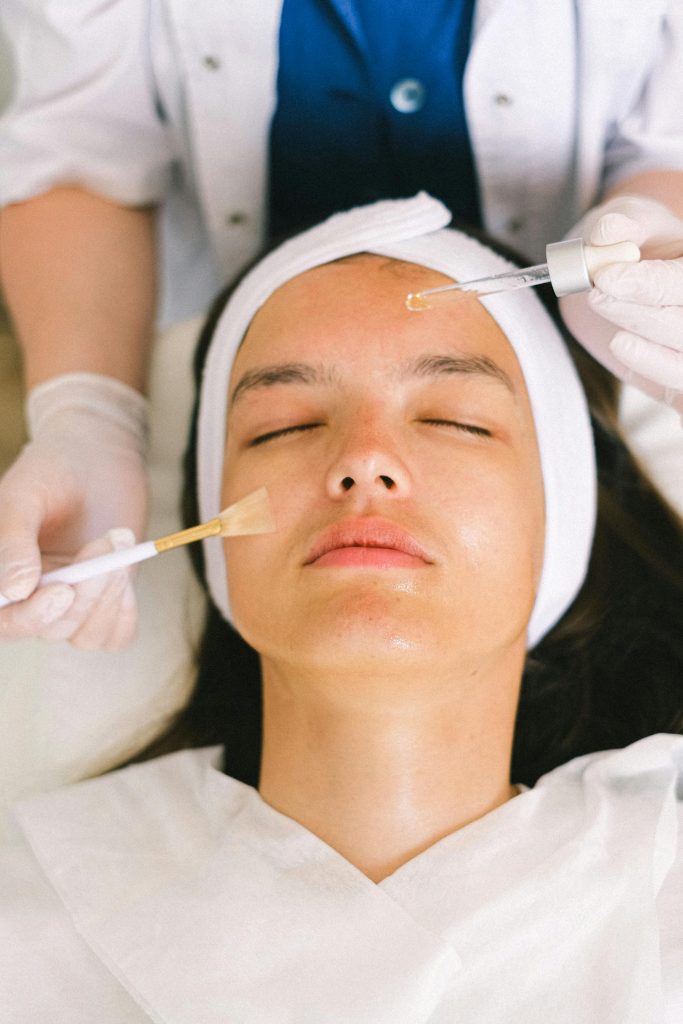
Chemical peels at medical strength can improve superficial scarring and overall skin texture by removing damaged outer layers and stimulating new cell turnover. The chemical peels offered at Elect Dermatology range from light to deep, with deeper peels producing more dramatic improvement in scar texture. TCA peels at higher concentrations are particularly effective for acne scarring.
Dermal fillers can provide immediate improvement in depressed scars by physically restoring volume beneath the scar. Hyaluronic acid fillers can be injected directly under individual scars to lift them to the level of surrounding skin. While not permanent, fillers provide instant visible improvement while longer-term collagen-remodeling treatments take effect.
Subcision is a minor surgical procedure where a needle is inserted beneath the scar to break the fibrous bands pulling the skin surface downward. It’s particularly effective for rolling scars and can be combined with fillers or microneedling for enhanced results.
Frustrated with acne scars that won’t respond to over-the-counter products? Our board-certified dermatologists specialize in acne scar treatment in New Braunfels and can evaluate your scars and build a real treatment plan. Call (833) 353-2875 or request an appointment online.
Why Over-the-Counter Products Can’t Fix Acne Scars
The skincare industry spends billions marketing products that claim to reduce or eliminate scars. Some of these products — particularly retinoids, vitamin C, and AHAs — do have evidence supporting mild improvement in skin texture and pigmentation. But they cannot repair structural collagen loss in the dermis, which is the fundamental problem with acne scars.
Think of it this way: if your driveway has a pothole, you can clean it, paint over it, and polish the surrounding surface — but the pothole is still there. You need to fill it and resurface it to actually fix the problem. Acne scar treatment works the same way: you need procedures that physically rebuild the collagen structure (microneedling, RF microneedling, lasers) or restore volume (fillers, subcision) to achieve meaningful improvement.
This doesn’t mean topical skincare is useless — it plays an important supporting role. Retinoids enhance cell turnover and support collagen production, sunscreen prevents scar darkening, and barrier-repair moisturizers keep skin healthy during treatment. But topicals are the supporting cast, not the lead.
What to Expect from Acne Scar Treatment
Realistic expectations matter. Acne scar treatment can produce dramatic improvement — many patients achieve 50% to 80% reduction in scar visibility over a treatment series — but it’s important to understand that complete elimination of all scarring is rarely possible. The goal is to make scars significantly less noticeable, improve overall skin texture, and restore confidence in your appearance.
Treatment takes time. Most acne scar treatment plans involve 3 to 6 sessions spaced several weeks apart, and collagen remodeling continues for months after each treatment. Plan for a 6- to 12-month timeline from your first session to final results. This isn’t a quick fix — it’s a structured process that produces real, lasting improvement.
Combination approaches work best. Research consistently shows that combining multiple modalities — for example, subcision followed by RF microneedling, or microneedling combined with chemical peels — produces superior results compared to any single treatment alone. Your dermatologist will sequence treatments strategically based on your scar types and how your skin responds.
Active acne must be controlled first. If you’re still getting breakouts, treating scars while new ones are forming is counterproductive. Your dermatologist will ensure your acne is well-controlled — using prescription topicals, oral medications, or other therapies as needed — before beginning scar treatment.
Frequently Asked Questions About Acne Scar Treatment in New Braunfels
How much does acne scar treatment cost? Costs vary depending on the treatments used and the number of sessions needed. Microneedling sessions typically range from $300 to $600, RF microneedling from $400 to $800, and chemical peels from $150 to $500 per session. Most patients need multiple sessions. Your dermatologist at Elect Dermatology will provide transparent pricing during your consultation, and package pricing is often available for treatment series.
Does insurance cover acne scar treatment? Most acne scar treatments are considered cosmetic and are not covered by insurance. However, if you have active acne that needs to be controlled before scar treatment, the acne management portion is typically covered as a medical condition. Our staff will help you understand what’s covered under your specific plan.
Is acne scar treatment safe for darker skin tones? Yes, but treatment selection matters. Some procedures — particularly ablative lasers — carry higher risk of post-inflammatory hyperpigmentation in darker skin. RF microneedling and certain chemical peels are generally safer for patients with Fitzpatrick skin types IV through VI. A board-certified dermatologist will select appropriate treatments based on your skin type to minimize risk.
At what age should I start acne scar treatment? Acne scar treatment can begin once your acne is well-controlled and you’re no longer experiencing frequent breakouts. There’s no minimum age — many patients in their late teens and early twenties benefit from early intervention.
Will my acne scars come back after treatment? The improvement from collagen-remodeling treatments is long-lasting because you’re actually rebuilding the skin’s structural framework. However, ongoing sun protection is essential to maintain results — UV damage breaks down collagen and can darken scar pigmentation. Annual maintenance sessions can help sustain optimal results over time.
Get Expert Acne Scar Treatment in New Braunfels, TX
Acne scars don’t define you — and they don’t have to be permanent. The right acne scar treatment in New Braunfels from a board-certified dermatologist can produce dramatic, lasting improvement in scar depth, texture, and overall skin quality using advanced procedures that actually rebuild what acne destroyed.
At Elect Dermatology, Dr. Hockley and Dr. Stahr evaluate every patient’s scars individually — identifying scar types, assessing skin tone, and building a multi-step treatment plan designed to deliver maximum improvement with the approach that’s right for your skin, your goals, and your budget.
New patients are welcome, and we’re currently accepting same-week appointments.
Call us today at (833) 353-2875 or request an appointment online. We’re conveniently located at 2154 Gabriels Pl, Ste 103, New Braunfels, TX 78130 — serving patients from across Comal County, including San Marcos, Seguin, Canyon Lake, Schertz, and the greater San Antonio area.
Schedule Your Dermatology Appointment
Our board certified dermatologists in New Braunfels are here to help. New patients are always welcome.