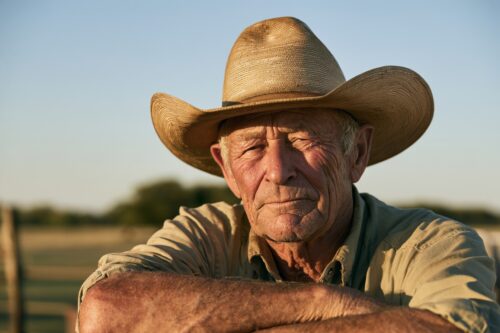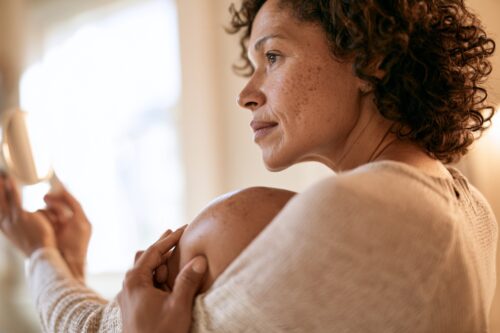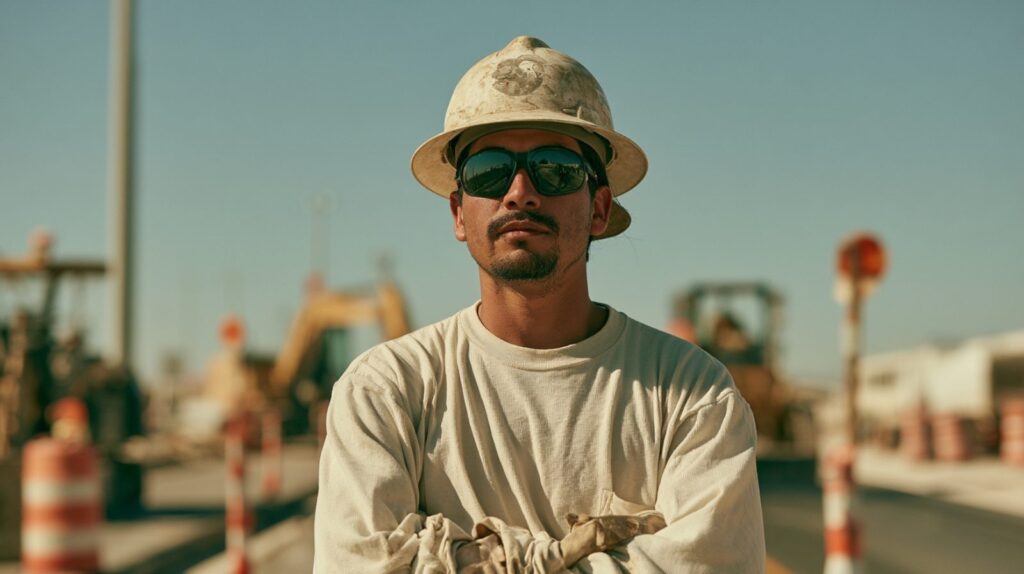
Skin cancer risk for outdoor workers in Texas is substantially elevated compared to the general population — and yet it is one of the most underaddressed occupational health issues across the state. Roofers, ranchers, construction crews, surveyors, landscapers, oil field workers, and farmers spend 6–8 hours daily under direct Texas sun, accumulating UV doses that dwarf typical indoor-worker lifetime exposure. Texas’s latitude, reflected UV from concrete and caliche surfaces, and year-round sunshine create a high-risk environment that demands proactive skin protection and regular professional screening.
Why Outdoor Workers Face Substantially Higher Skin Cancer Risk
Cumulative UV exposure is the strongest modifiable risk factor for all three major forms of skin cancer — basal cell carcinoma (BCC), squamous cell carcinoma (SCC), and melanoma. Outdoor workers accumulate far higher lifetime UV doses than office-based workers, simply through the mathematics of daily sun exposure over a 30–40 year career.
According to the International Agency for Research on Cancer (IARC), solar UV radiation is classified as a Group 1 carcinogen — the highest-certainty category. Occupational solar UV exposure is independently associated with elevated risk of BCC, SCC, and lip SCC in particular. A comprehensive review in Schmitt and colleagues in the British Journal of Dermatology (2011) pooled 18 studies and found that workers with occupational UV exposure had roughly 1.8 times the odds of developing cutaneous SCC compared with workers without it (pooled odds ratio 1.77, 95% CI 1.40–2.22); 16 of the 18 studies pointed the same direction.
Texas amplifies this risk: the EPA UV Index regularly reaches 10–11+ on summer days in Central Texas — the “Very High” to “Extreme” range. Even on overcast days, up to 80% of UV radiation penetrates cloud cover. Reflected UV from concrete, white caliche roads, metal roofing, and open water further increases effective exposure. Workers who assume overcast skies are protective are receiving a meaningfully higher UV dose than they realize.
Types of Skin Cancer Most Common in Outdoor Workers
Four diagnoses account for nearly all of what we find on outdoor workers. Each is covered in more depth on our skin cancer page.
Basal Cell Carcinoma (BCC) — the most common skin cancer overall — frequently presents on chronically sun-exposed areas: the face, ears, nose, lower lip, and back of the neck. It typically appears as a pearly or translucent bump, a scar-like lesion, or a pink growth. BCC rarely metastasizes but can cause significant local tissue destruction if neglected.
Squamous Cell Carcinoma (SCC) is the skin cancer most strongly linked to cumulative UV exposure. It commonly presents as a rough, scaly, or crusted patch or nodule on sun-exposed skin — the lower lip, ears, backs of the hands, and forearms are particularly common sites in outdoor workers. Unlike BCC, SCC carries meaningful metastatic potential, particularly on the lip and ear. Early diagnosis and treatment are essential — and for patients who are poor surgical candidates or who want to avoid a scar on the face or ear, we also offer image-guided superficial radiation therapy as a non-surgical alternative.
Actinic Keratoses (AK) are UV-induced precancerous lesions — rough, scaly, sometimes tender patches that can progress to SCC if left untreated. They are extremely prevalent in outdoor workers and represent the most visible early signal of cumulative UV damage. Treatment of AKs is both simpler and more effective than treating invasive SCC.
Melanoma risk also increases with significant UV exposure, though the relationship is more complex than with BCC and SCC. Melanoma can develop on any body surface, including areas not directly sun-exposed. Early detection through regular skin checks is critical — melanoma caught while it is still localized, meaning it has not spread beyond the skin where it started, carries a 5-year relative survival rate above 99%, while melanoma that has spread to distant sites drops to 36%, per the American Cancer Society.
Prevention Strategies for Outdoor Workers in Texas
Effective sun protection requires multiple simultaneous strategies — no single intervention is sufficient on its own.
Sunscreen: Apply broad-spectrum SPF 30+ (ideally SPF 50+) to all exposed skin every morning, and reapply every 2 hours during outdoor work, or immediately after heavy sweating. Water-resistant, sweat-resistant formulas are essential for outdoor laborers. Mineral sunscreens (zinc oxide, titanium dioxide) are particularly robust under Texas summer conditions. Lip balm with SPF 30+ should be applied to the lips specifically — the lower lip is a high-risk SCC site.
Protective clothing: Long-sleeved shirts and long pants provide substantial UV reduction. UPF (ultraviolet protection factor)-rated work clothing is available from multiple workwear manufacturers and is often more practical than sunscreen reapplication for workers who cannot pause regularly. Wide-brimmed hats (3-inch brim minimum) protect the face, ears, and neck — a baseball cap leaves the ears and lateral neck unprotected.
Eye and face protection: UV-blocking sunglasses protect the periocular skin and reduce squinting-related crow’s feet acceleration. Full-brim or legionnaire-style hats provide the broadest coverage.
Schedule modifications: Where the work schedule allows, reducing midday UV exposure (approximately 10 AM–4 PM, when the UV index peaks) provides measurable protection. Even 10–15 minute shade breaks reduce cumulative exposure.
Vehicle and equipment UV exposure: Drivers spending significant time in vehicles accumulate asymmetric UV exposure on the left arm and face (driver’s side window UV). Standard automotive glass blocks UVB but not UVA. Window film or SPF application on the left arm reduces this exposure pattern.
Annual Skin Checks: Essential, Not Optional
For outdoor workers, annual professional full-body skin exams are not a discretionary wellness activity — they are occupational health maintenance. The American Academy of Dermatology’s guidance on how to check your skin makes the underlying point plainly: checking your skin regularly helps catch skin cancer early, when it is highly treatable. For patients whose job puts them under the sun all day, we recommend pairing those self-checks with an annual professional full-body exam.
At Elect Dermatology in New Braunfels, Dr. Stahr and Dr. Hockley perform comprehensive full-body skin exams that cover every skin surface — including the scalp, ears, lips, between the fingers and toes, soles of the feet, and areas typically covered by clothing. Dermoscopic imaging is used to evaluate suspicious lesions — see our guide to mole mapping and dermoscopy for what that looks like in the exam room — and biopsies can be performed the same day when clinically indicated. Early detection and treatment, when tumors are small and localized, dramatically reduces morbidity and the complexity of treatment.
Workplace Skin Cancer Prevention Programs
If you work for a construction, landscaping, agricultural, or utility company, workplace-level skin cancer prevention programs are an evidence-supported approach to reducing occupational skin cancer rates. Programs may include:
- Employer-provided SPF 30+ sunscreen at job sites
- UPF-rated work apparel as standard PPE
- Shade structures or sun shelters at fixed work sites
- Education on the ABCDE criteria for self-examination
- Scheduling adjustments to reduce peak UV midday exposure where feasible
OSHA has recognized solar UV as an occupational hazard; some industries have begun incorporating skin cancer prevention into their occupational health frameworks.
Know the Signs: When to See a Dermatologist Promptly
Don’t wait for your annual appointment if you notice any of the following on yourself or a coworker:
- A new mole or lesion that appears suddenly, especially on sun-exposed skin
- Any mole or lesion that changes in size, shape, color, or border
- A sore that bleeds, itches, crusts over, or fails to heal within 3–4 weeks
- A scaly, rough, or thickened patch on the ears, lower lip, face, or hands
- A pearly, translucent, or waxy bump that slowly enlarges
Frequently Asked Questions: Skin Cancer for Outdoor Workers
Q: How often should outdoor workers get professional skin exams?
At minimum, annually. Outdoor workers with significant cumulative sun exposure, atypical moles, or prior skin cancer history may benefit from exams every 6 months. Your dermatologist will advise the right interval for your risk profile.
Q: Does sunscreen still work when I’m sweating heavily?
Yes, but reapplication is essential. Sweat significantly degrades sunscreen coverage. Reapply every 2 hours regardless, or more frequently with heavy sweating. Water-resistant formulas rated for 80-minute water resistance perform better under occupational conditions.
Q: Is SPF 30 enough, or do outdoor workers need SPF 50+?
The AAD recommends SPF 30+ as a minimum. For outdoor workers with extended daily exposure, SPF 50 offers additional margin. More importantly, consistent application and reapplication matters more than the specific SPF number above 30.
Q: Are long sleeves really better than sunscreen for full-day outdoor work?
For areas covered by clothing, UPF-rated fabric is generally more reliable than sunscreen for full-day outdoor work — it doesn’t wear off, doesn’t need reapplication, and provides consistent coverage. Combining UPF clothing with sunscreen on exposed areas (face, neck, hands) is the most effective approach.
Related Reading
- Skin Cancer Diagnosis and Treatment in New Braunfels
- Mole Mapping and Dermoscopy in New Braunfels
- Superficial Radiation Therapy (SRT/EBT): Non-Surgical Skin Cancer Treatment
- Board-Certified Dermatologist vs. Med Spa: Why It Matters
References
- IARC Monographs on the Evaluation of Carcinogenic Risks to Humans, Volume 100D: Solar and Ultraviolet Radiation. International Agency for Research on Cancer, 2012. NCBI Bookshelf
- Schmitt J, Seidler A, Diepgen TL, Bauer A. Occupational ultraviolet light exposure increases the risk for the development of cutaneous squamous cell carcinoma: a systematic review and meta-analysis. Br J Dermatol. 2011;164(2):291–307. PubMed
- American Academy of Dermatology. Check your skin. AAD.org
- American Cancer Society. Survival rates for melanoma skin cancer. ACS.org
- EPA. UV Index: what you need to know. EPA.gov
If you work outdoors in Texas — as a roofer, rancher, construction worker, landscaper, or in any occupation that puts you in the sun for hours every day — you need a board-certified dermatologist in your corner. The team at Elect Dermatology in New Braunfels performs comprehensive skin cancer screenings, treats actinic keratoses before they progress, and biopsies concerning lesions same-day. Call (833) 353-2875 to schedule your skin exam — or visit us at 2154 Gabriels Pl, Ste 103, New Braunfels, TX 78130. Don’t let the most preventable cancer in your profession go undetected.
Reviewed by Dr. Stahr
Schedule Your Dermatology Appointment
Our board certified dermatologists in New Braunfels are here to help. New patients are always welcome.